











Spend enough hours at a desk — whether grinding ranked matches, shipping code, or doing both back-to-back — and your chair stops being furniture. It becomes the single most consequential piece of your setup. The gaming chair vs ergonomic chair debate matters precisely because of this: a wrong choice doesn't just make you uncomfortable, it shapes your posture, your focus, and how your body feels at the end of every day. According to a 2024 EU-OSHA workplace survey, prolonged sitting topped the list of reported occupational risk factors, cited by 64% of workplaces — ahead of every other hazard. The chair you're sitting in while you read this is either working for you or quietly working against you.
The conventional wisdom says gaming chairs are for gamers and ergonomic chairs are for offices — but that line has blurred considerably. Today's best gaming chairs incorporate genuine ergonomic engineering, and many office chairs have evolved to support the dynamic postures that gamers and remote workers actually use. The real question isn't which category wins on paper. It's which chair delivers real, sustained support for the specific way you sit, across the hours you actually put in. This guide breaks down every dimension that matters — lumbar systems, foam density, armrest adjustability, materials, and build quality — so you can make a decision built on performance, not marketing.
How Gaming Chairs and Ergonomic Chairs Differ by Design
The foundational difference between these two chair types isn't cosmetic — it's philosophical. Gaming chairs trace their roots directly to racing car bucket seats: high bolstered sides, a winged backrest, aggressive stitching, and bold color schemes designed to signal immersion and identity. The idea was to recreate the feeling of a cockpit, which works beautifully for short, intense gaming sessions. The problem is that racing seats are engineered for safety and lateral support during high-speed driving — not for the static, hours-long postures of desk work and gaming alike.
Ergonomic chairs, by contrast, evolved from decades of workplace health research. Their design starts with a question: how do we keep a human body comfortable, supported, and biomechanically healthy during eight or more hours of seated work? The answers involve S-curved backrests that mirror the spine's natural shape, adjustable lumbar mechanisms, breathable materials that prevent heat buildup, and tilt systems that encourage subtle micro-movement throughout the day. Form follows function almost entirely — aesthetics are secondary to spinal geometry.
But here's the nuance that most comparisons miss: the best gaming chairs today are no longer purely racing-seat derivatives. Premium gaming chairs have increasingly adopted genuine ergonomic engineering — built-in lumbar systems, multi-axis armrests, high-density contour foam, and reclining mechanisms with real tension control. The category has matured significantly, and the gap between a well-engineered gaming chair and a quality ergonomic office chair is considerably smaller than it was even five years ago. The critical variable is not the label on the box. It's the specific features inside it.
The Lumbar Support Test: Where Most Chairs Win or Lose
Ask any physio, ergonomist, or chronic back-pain sufferer what the single most important feature in a chair is, and you'll get the same answer: lumbar support. The lumbar spine — the lower five vertebrae — bears the majority of compressive load when you sit, and without proper support for its natural inward curve, the discs, ligaments, and muscles in that region accumulate fatigue over time. A 2025 study published in Scientific Reports found that prolonged sitting with poor ergonomic support was significantly associated with increased neck, back, and knee pain among office workers. The chair's lumbar system is the primary variable that determines whether your back is protected or punished.
This is where the most meaningful divide between chair types still exists. Many traditional gaming chairs rely on removable external lumbar pillows — a cushion strapped to the backrest that's quick to produce and inexpensive to include. The issue is reliability: these pillows shift downward when you lean forward to type, slide out of position when you recline, and lose their shape over months of compression. They provide a soft buffer rather than structured support, and they rarely align precisely with your individual lumbar curve.
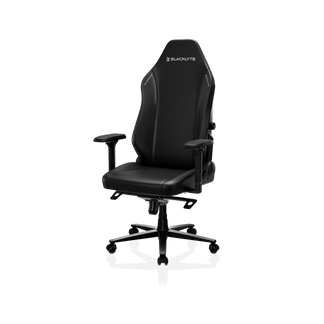
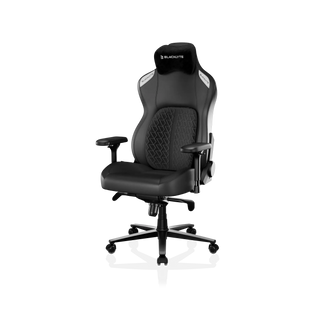
Contrast that with the built-in lumbar systems found in well-engineered chairs. Blacklyte's gaming chair lineup illustrates the spectrum well. The Kraken Pro features a built-in floating lumbar with front-to-back fine-adjustment and a lock, letting you dial in protrusion precisely and keep it there regardless of how much you shift around during play. The flagship Athena Pro goes furthest, with a 4-way adjustable built-in lumbar that moves both vertically (up and down) and horizontally (front and back) — targeting your exact lumbar level with millimeter precision. The Athena ships with an external lumbar pillow — a sensible, adjustable solution for its price point. That granularity matters across a long day, because no two spines are identical in either shape or sitting height.
Armrests, Tilt, and the Adjustability Gap
Armrests are underestimated. Most people treat them as a convenience — somewhere to rest your elbows between tasks. In reality, armrest height and position directly affect shoulder tension, neck strain, and even lower back loading. Armrests set too high push the shoulders into a perpetual shrug; too low, and the arms hang unsupported, dragging tension through the upper back. The gold standard is a 4D armrest: adjustable in height, forward-back position, lateral width, and rotational angle. This combination lets you match the armrest to your desk height, your arm length, and your preferred posture — whether you're leaning in for focused play or sitting back for a long work call.
Across the full Blacklyte lineup, 4D armrests are standard equipment. This matters because many competing brands reserve this feature for flagship-tier models, leaving buyers at other price points with simpler 2D or even fixed armrests. Blacklyte's decision to equip every chair in the range with full 4D adjustability reflects a genuine ergonomic commitment rather than a upsell mechanism.
Tilt mechanisms are similarly consequential for all-day sitting. Static upright posture, regardless of how "correct" it looks, creates sustained static load on the spinal muscles and intervertebral discs. The ability to recline — even modestly — allows those muscles to cycle through different load states throughout the day, reducing cumulative fatigue. Blacklyte chairs use a frog-type tilt mechanism with adjustable tilt tension, supporting a tilt-back angle of approximately 14 degrees and a full recline range of 90° to 149° across all current models. The tension adjustment lets you tune the resistance to your body weight, so you can lean back with gentle pressure rather than fighting the mechanism or collapsing into full recline. It's a subtle but meaningful detail for anyone spending serious hours in a chair.
Materials and Breathability: The Long-Session Reality
Material choice has a direct impact on comfort that compounds over hours. Traditional gaming chairs heavily favor synthetic leather — PU or PVC — for its visual appeal and easy cleaning. That aesthetic comes with a thermal tradeoff: synthetic leather doesn't breathe. During extended sessions, it traps body heat and moisture, creating the kind of clammy discomfort that erodes focus long before your back starts complaining. In a temperature-controlled office environment this is manageable, but in a home setup — especially through summer months — it can be a genuine source of fatigue.
Blacklyte addresses this directly with its proprietary FlexKnit™ Fabric, a breathable woven textile engineered specifically for long-session ventilation. For buyers who prefer an upholstered feel, the brand's DuraGen™ Leatherette provides a premium surface with improved durability over standard PU alternatives. Both materials represent deliberate engineering choices rather than cost decisions, reflecting the brand's positioning as a performance-first product. For context, the Athena Pro's seat takes the material story further — featuring memory foam (infused with bamboo charcoal and silver ions for temperature regulation and antimicrobial properties) over a contour-foam core, making it the only chair in the current lineup to use memory foam cushioning. The Athena and Kraken Pro use high-quality contour foam throughout their seats, delivering structured support without the gradual sink that softer memory foams can introduce during task-focused work.
Pure ergonomic office chairs often resolve the breathability question with full mesh backrests — a material that excels at airflow but sacrifices the padded, enveloping feel that many gamers and hybrid workers prefer. Neither approach is universally superior; it depends on your climate, your sensitivity to heat, and whether you value cushioned contact or open-air breathability. The important thing is making an informed choice, not defaulting to whichever option looks better in a product photo.
Foam Quality and Build: What Holds Up Over Years
Foam density is one of the most consequential — and least discussed — factors in chair longevity. Low-density foam feels plush initially but compresses permanently under daily use, flattening within one to two years and eliminating the contouring support the chair was designed to provide. Budget gaming chairs are particularly susceptible to this, often using foam in the 25–35 kg/m³ range that degrades quickly. Higher-density cold-cure foam maintains its shape and support properties over years of daily use, providing consistent ergonomic performance rather than a comfort spike followed by a long decline.
Blacklyte uses high-density cold-cure foam across its lineup, with the grade tuned to each series rather than simply maximized — denser foam lasts longer but feels firmer, so each model is balanced for support and comfort instead of chasing the highest possible number. All of it sits meaningfully above the budget-chair average and is engineered to retain its structure over the chair's lifespan. Combined with a Class 4 hydraulic gas piston for smooth, safe height adjustment, aluminum alloy 5-star bases on the Athena, Athena Pro, and Kraken Pro, and warranties extendable up to 5 years for chairs, Blacklyte's build quality reflects a product designed for sustained daily use rather than initial showroom appeal.
Build quality at the structural level also separates serious chairs from decorative ones. A stable 5-star base, quality caster wheels that roll smoothly without scratching floors, and durable upholstery stitching all contribute to long-term performance. These aren't exciting spec-sheet items, but they're what determines whether your chair still feels like a premium product in year three — or whether it's wobbling and peeling by year one.
The Hybrid Use Case: When Gaming and Work Share One Chair
The traditional framing of this debate assumes a clear separation: gaming chairs for gamers, ergonomic chairs for office workers. That separation no longer reflects how people actually live. Remote work, streaming, content creation, and competitive gaming increasingly share the same desk, the same monitor, and the same chair. If you're logging eight hours of work calls and documentation followed by a two-hour gaming session, you need a chair that handles both contexts without compromise — and that changes the calculus significantly.
A purely task-oriented ergonomic chair may struggle with the recline range and positional variety that a gaming session demands. Conversely, a traditional gaming chair may provide adequate short-session comfort but fall short of the structured, adjustable support that focus-intensive work requires over a full day. The ideal chair for a hybrid user is one that was engineered with both scenarios in mind — deep enough recline for relaxed gaming or media consumption, structured enough lumbar and armrest adjustability for heads-down work, and materials durable enough to handle continuous daily use without degrading.
This is precisely the design brief that Blacklyte was built around. With 20 years of industry expertise and over 20 global esports partnerships — including tournament organizer BLAST and teams like Team Liquid and Fnatic — the brand has direct, ongoing access to the world's most demanding seated performers. That feedback loop informs every engineering decision, from lumbar system design to foam density to recline mechanism tension. The result is a chair that doesn't ask you to choose between gaming performance and ergonomic integrity. You can explore the full range and compare chair specifications side by side to find the right fit for your specific setup. For a deeper look at how to optimize your workstation ergonomics beyond the chair itself, the Blacklyte Ergonomics resource is worth bookmarking.
Who Should Choose What? A Practical Decision Guide
Rather than a blanket recommendation, the right answer depends on your specific usage profile. Here's a clear framework based on the features that actually matter for all-day sitting:
Choose a well-engineered gaming chair (like the Blacklyte Kraken Pro or Athena Pro) if you spend a significant portion of your day gaming, need a wide recline range for positional variety, want 4D armrests across the full lineup without paying flagship prices, and prefer an upholstered feel with esports-inspired aesthetics. A gaming chair with a built-in lumbar system, high-density foam, and quality build can absolutely sustain all-day sitting — the key word being "built-in." A gaming chair with only an external lumbar pillow is a different proposition for extended desk hours.
Choose a dedicated ergonomic chair if your use is predominantly task-focused work (8+ hours of typing, coding, video calls), you prioritize breathable mesh for climate comfort, and you don't need the recline range or gaming aesthetic of a purpose-built gaming chair. The ergonomic chair's strength is in comprehensive, granular adjustability engineered specifically around upright, task-focused posture.
The hybrid solution — an ergonomically engineered gaming chair from a brand with genuine credentials in both spaces — is the answer for anyone whose day genuinely spans both worlds. These are no longer a compromise category. At Blacklyte's level, they represent the convergence of both design philosophies in a single, well-executed product. Learn more about ergonomics for gaming and how to optimize your setup for both performance and health.
What to Look For: A Buyer's Checklist
Before you commit to any chair — gaming or ergonomic — run through these non-negotiable criteria. The market is full of products that look impressive in renders but underdeliver in daily use, and these are the factors that separate genuine performance from aesthetic-driven marketing.
- Lumbar support type: Built-in adjustable lumbar (height and/or depth) outperforms a removable pillow for all-day use. Know which type you're getting before purchasing.
- Armrest adjustability: Look for at minimum 3D armrests; 4D (adding rotational angle) is the current standard for chairs designed for extended sessions.
- Foam quality: Look for genuine high-density cold-cure foam — though remember denser isn't automatically better, since it also feels firmer, so balance matters. Foam that compresses permanently within a year undermines every other ergonomic feature in the chair.
- Recline range and tension control: A recline range of 90°–149° with adjustable tension allows genuine positional variety without the mechanism fighting you or offering no resistance at all.
- Gas piston quality: A Class 4 hydraulic gas piston is the relevant safety and durability standard. It's worth confirming rather than assuming.
- Upholstery material: Consider your room temperature and session length. Breathable fabric or technical knit for warm environments; leatherette for those who prefer a firmer, more structured surface feel.
- Base material: Aluminum alloy bases are lighter and more durable than nylon; steel bases offer solid stability. Both are viable; nylon is the category to avoid at performance price points.
- Warranty and return policy: A meaningful warranty (extendable to 5 years for chairs and desks at Blacklyte) signals manufacturer confidence in build quality. A trial return window lets you validate comfort before fully committing.
Keep in mind that no checklist replaces time in the chair. If you can, take advantage of a generous return window — Blacklyte offers 30-day easy returns — to validate real-world fit before committing long-term.
The Blacklyte Difference: Ergonomics Meets Esports DNA
Blacklyte occupies a genuinely distinctive position in this market: a brand with 20 years of gaming furniture expertise, trusted by over 200,000 users across 50+ Countries and Regions, and built on direct partnerships with the esports ecosystem — including tournament organizer BLAST and teams such as Team Liquid, Fnatic, and Team Spirit. That isn't background decoration. It means Blacklyte's products are stress-tested by the people who spend the most demanding hours in chairs on the planet, and the engineering reflects that.
The current chair lineup — the premium Kraken Pro, the flagship Athena Pro, and the Athena — covers a meaningful range of user profiles and budgets without compromising on the fundamentals. All three ship with 4D armrests, Class 4 hydraulic gas pistons, and recline ranges of 90°–149°. Where they differentiate is in lumbar system sophistication, foam specification. That differentiation is logical and transparent — Blacklyte's chair comparison tool makes it straightforward to match spec to need without guesswork.
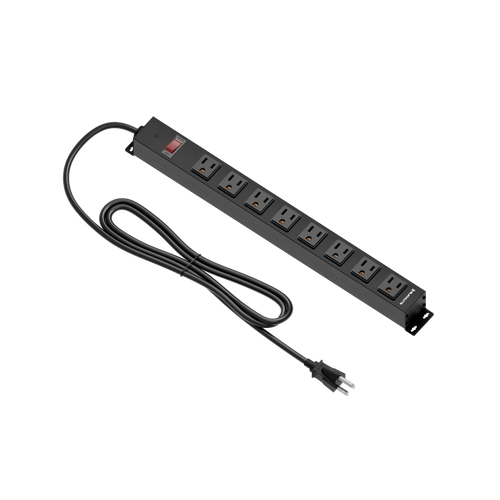
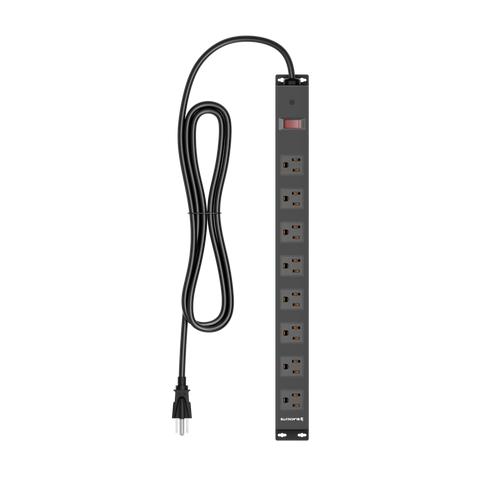
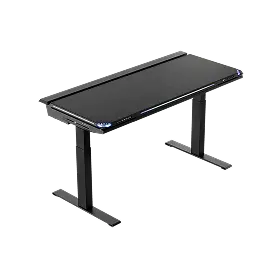
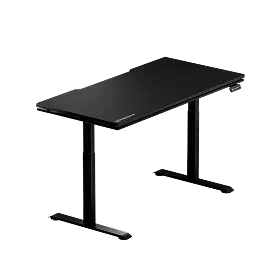
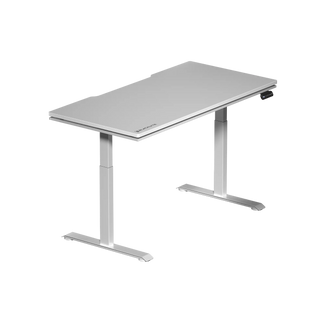
For those building out a complete workstation, Blacklyte's standing desk range — the Atlas and Atlas Lite, both with cable management and a built-in electrical socket (an integrated power strip — no USB, and it doesn't supply power on its own), with the Atlas adding a magnetic surface and smart lighting via Atlas Driver software — is engineered to pair with the chair lineup. An ergonomic chair at the right height, paired with a desk that can transition between sitting and standing posture, creates a setup that addresses the fundamental biomechanical problem: the best posture is always your next one. Browsing the full Blacklyte product range or current promotions is the fastest way to find the right combination for your budget and setup. Collab and partner chair editions are also worth exploring if esports identity is part of what you're looking for.
The Verdict
The gaming chair vs ergonomic chair debate doesn't have a single universal answer — but it does have a clear framework. If your sessions are short and your priority is immersion and style, a conventional gaming chair does the job. If your day is eight-plus hours of task-focused work with minimal positional variety, a traditional ergonomic chair earns its reputation. But for the growing majority of people whose day genuinely spans both — work, play, creation, and everything in between — the answer is a well-engineered chair that takes ergonomics as seriously as it takes performance.
The features that determine all-day comfort are specific and measurable: the type of lumbar support (not just its presence), foam density that holds up over years, 4D armrests across the full lineup, a tilt mechanism with real tension control, quality materials that manage heat over long sessions, and a build quality backed by a meaningful warranty. A chair that checks all of these boxes doesn't ask you to trade one priority for another. It delivers both. That's the benchmark worth holding any chair to — regardless of what category label it carries.
Not Sure Which Chair Is Right for You?
Blacklyte's team of ergonomics and gaming setup experts is ready to help you find the perfect match for your body, your hours, and your space. Whether you're building a battle station, a home office, or something that handles both — we've got you covered.
Contact Us


