








Is Standing Better Than Sitting? The Honest Answer
You've probably heard it by now: sitting is the new smoking. It's become the rallying cry of wellness culture, the justification for standing desk purchases, and the reason countless office workers now hover awkwardly at chest-height workstations for hours at a time. But is standing at your desk actually better for you than sitting? Or have we just traded one extreme for another?
The honest answer is more nuanced than most articles will admit — and it has serious implications for how you set up your workspace, whether you're grinding ranked matches, powering through a 9-to-5, or doing both. This article breaks down what science says about prolonged sitting, the real risks of standing all day, and the evidence-backed approach that actually protects your body long-term.
The Question Everyone Is Asking
The sitting-versus-standing debate exploded into mainstream health conversation around 2010, when a series of studies linked prolonged sedentary behavior to increased risks of cardiovascular disease, type 2 diabetes, metabolic syndrome, and even early mortality — independent of how much exercise someone did outside of work. That last point was the shocking part. You could hit the gym every morning and still be doing measurable damage to your health by sitting motionless for eight hours afterward.
Standing desks followed as the obvious solution, and the market ballooned. But as adoption grew, so did a new wave of research — this time scrutinizing what happens when people stand for extended periods. The results were humbling. It turns out the question was never really "sitting or standing?" It was always about something deeper: how you move, how often, and what kind of support your body has while you do it.
What Prolonged Sitting Actually Does to Your Body
Let's start with the part that's well-established. Sitting for long, unbroken periods creates a cascade of physical problems that compound over time. When you're seated without proper posture support, the lumbar spine loses its natural inward curve — a condition called lumbar flexion — which increases pressure on the intervertebral discs and can accelerate disc degeneration. The hip flexors and hamstrings shorten and tighten, the glutes become chronically underactivated, and the upper back rounds forward, pulling the shoulders inward and cranking up tension across the neck and trapezius muscles.
Beyond the musculoskeletal effects, extended sitting slows blood circulation. The calf muscles — which act as a pump to return venous blood from the lower limbs — are essentially idle when seated. This contributes to swelling in the legs and feet, increases the risk of deep-vein thrombosis in extreme cases, and over time correlates with the elevated cardiovascular markers that made the early research so alarming. Add poor monitor positioning, a non-ergonomic chair, and the forward-head posture that most people adopt when staring at a screen, and you have a formula for chronic pain and long-term injury.
None of this means sitting is inherently dangerous. Humans have always sat. The problem is sitting badly, sitting excessively, and sitting without interruption.
Is Standing All Day the Answer?
Short answer: no. Standing continuously for hours introduces its own serious problems. Research published in journals including the American Journal of Epidemiology has associated prolonged occupational standing with increased risk of varicose veins, musculoskeletal fatigue in the lower limbs, and lower back pain — particularly when standing on hard surfaces without adequate footwear or anti-fatigue mats. Nurses, surgeons, retail workers, and factory floor staff deal with these consequences professionally.
When people first get a standing desk and use it as a standing-only desk, they often find themselves shifting weight, locking their knees, hyperextending their lower back, or subtly rounding forward — recreating many of the same postural problems they were trying to escape. Standing is not a passive fix. It requires active postural engagement that most people don't sustain naturally, especially during cognitively demanding tasks like coding, gaming, or writing.
There's also an energy and focus cost. A 2017 study from the Occupational and Environmental Medicine journal found that prolonged standing increased muscle fatigue and reduced cognitive performance over time. So the idea that standing all day makes you more alert and productive is, frankly, not well supported.
What the Research Actually Says
The most rigorous reviews on this topic point in one consistent direction: neither posture is superior — movement is. A landmark review from the British Journal of Sports Medicine recommended that desk workers aim for at least two hours of standing and light movement per day during work hours, gradually building toward four hours, while avoiding prolonged uninterrupted periods in either position. This wasn't a pro-standing manifesto. It was a pro-movement one.
Studies that have tested sit-stand desks in controlled environments generally show modest but real benefits: reduced reports of lower back discomfort, improved mood, reduced fatigue, and slightly higher energy expenditure. These benefits are most pronounced when the desks are used dynamically — meaning users actually alternate positions — rather than treated as permanent standing stations. The desk is a tool. How you use it determines the outcome.
The Real Enemy Is Stillness, Not Sitting
Here's the insight that changes how you should think about your entire workspace setup: the problem is prolonged static loading — staying in any single position for too long without movement or postural variation. Sitting well, with proper lumbar support and regular micro-breaks, is significantly better than standing poorly for long stretches. And standing with frequent position shifts and proper anti-fatigue support beats slouching in a broken chair every time.
This reframe is important because it shifts the conversation from furniture type to total ergonomic strategy. Your chair matters enormously. The quality of your lumbar support, the adjustability of your armrests, the firmness and contouring of your seat — these factors determine whether sitting becomes a source of chronic pain or a productive, supported position you can sustain comfortably. And your desk determines whether transitioning between sitting and standing is seamless enough that you'll actually do it, or a friction-laden chore you avoid.
If you're spending long hours at a workstation — whether for gaming, creative work, or professional productivity — the starting point is always the quality of your ergonomic foundation. Explore Blacklyte's full range of ergonomic workspace guidance to understand how posture engineering translates into real-world comfort and performance.
How to Sit Correctly (Most People Don't)
Before you rush to buy a standing desk, it's worth auditing how you currently sit. The majority of people do it wrong — and fixing technique can eliminate a substantial portion of the discomfort attributed to "sitting too much."
Proper seated posture starts with your feet flat on the floor and your hips at roughly 90–100 degrees. Your lower back should rest against the lumbar support of your chair — not hover away from it. Your shoulders should be relaxed and back, not hunched forward, and your elbows should rest comfortably at desk height with your forearms parallel to the floor. The top of your monitor should sit at or just below eye level. None of this happens automatically. It requires a chair that's actually designed to support these positions.
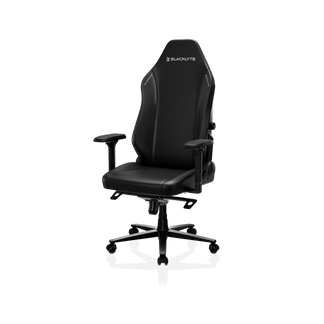
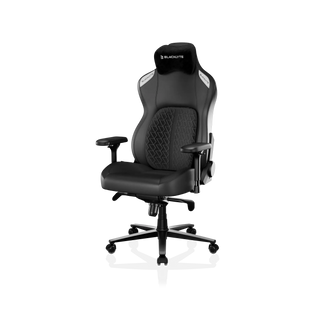
This is where ergonomic chair engineering becomes non-negotiable. A chair with properly contoured lumbar support — ideally one that adjusts to your specific spine curvature — does the postural work your muscles can't sustain for hours at a time. The Athena Pro, Blacklyte's flagship gaming chair, features a built-in 4-way adjustable lumbar system with both height and depth adjustment, letting you dial in precise contact with your lumbar curve rather than relying on guesswork. The Kraken Pro includes a floating lumbar with front-to-back fine adjustment, while the Athena comes with an external lumbar pillow for customizable positioning. All three recline from 90° to 149° and ship with 4D armrests across the full lineup, so your arms, wrists, and shoulders are never left unsupported regardless of which model you choose.
Want to see how the models stack up against each other? The chair comparison tool breaks down every spec side by side.
Building a Sit-Stand Routine That Works
Once your seated foundation is solid, adding a sit-stand routine genuinely amplifies the benefits. The research-backed sweet spot most ergonomists recommend is a 1:1 or 2:1 sitting-to-standing ratio during active work hours, with transitions happening roughly every 30 to 60 minutes. This isn't rigid — it's a guideline to prevent you from spending three hours locked in one position without noticing.
Practically, this looks like: sit for focused deep-work sessions (writing, coding, competitive gaming), stand for email, calls, lighter cognitive tasks, or when you feel your energy flagging. Use standing as a reset, not a marathon. And when you stand, keep moving — subtle weight shifts, occasional calf raises, or a brief walk to grab water all contribute to the circulation and muscle activation benefits that standing alone doesn't fully deliver.
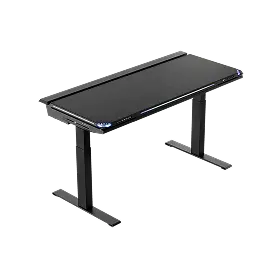
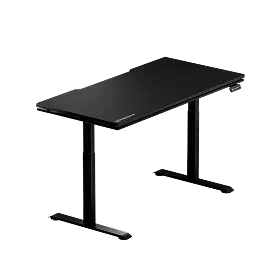
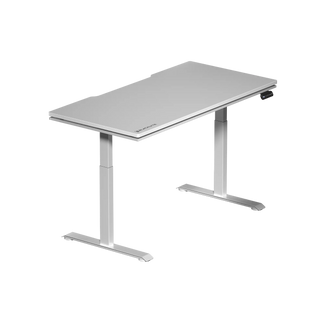
The infrastructure that makes this routine frictionless is a quality height-adjustable desk. If transitioning between heights takes effort, requires tools, or produces a distracting amount of noise, you won't do it consistently. The Atlas Desk and Atlas Lite Standing Desk are engineered for exactly this kind of daily dynamic use — with smooth electric height adjustment, programmable memory presets for your ideal sitting and standing heights, integrated cable management, and built-in power supply so your setup stays clean and your transitions stay instant. Use the desk comparison tool to find the configuration that fits your space and workflow.
The Right Setup Makes All the Difference
The honest answer to "is standing better than sitting?" is that the question itself is a distraction. What matters is whether your body is supported, whether you're changing positions regularly, and whether your environment makes good ergonomic habits easy to maintain. A great chair and a great desk don't compete with each other — they complete each other.
Whether you're a competitive gamer logging marathon sessions, a remote worker building a high-performance home office, or someone simply tired of ending the day with a tight lower back, the investment in proper ergonomic infrastructure pays off far faster than most people expect. Blacklyte's lineup of ergonomic gaming chairs and height-adjustable standing desks is built with exactly this use case in mind — backed by 20 years of engineering expertise, trusted by over 200,000 users across 50+ countries and regions, and built to perform under the demands of both intense gaming and full workdays. All chairs and desks are covered by a warranty extendable up to 5 years, so you're protected for the long haul.
For a deeper dive into optimizing your gaming environment from a posture and performance perspective, the Gaming Hub has everything you need. And if you're building a full ergonomic workstation, the Ergonomics page walks through the principles behind every design decision Blacklyte makes.
Conclusion
Standing isn't inherently better than sitting, and sitting isn't the health catastrophe it's sometimes made out to be. The real issue is prolonged stillness in any position, compounded by poor posture support and a workspace that doesn't encourage movement. The solution is dynamic: a well-engineered chair that supports proper seated posture for the hours when you are sitting, combined with a standing desk that makes transitioning between positions easy enough that you'll actually do it.
Get those two foundations right, build a consistent sit-stand rhythm into your day, and the debate between sitting and standing becomes irrelevant. Your body will tell you when it's time to switch — and your setup will make it effortless to do so.
Ready to Build the Perfect Ergonomic Setup?
Browse Blacklyte's full lineup of premium ergonomic gaming chairs and height-adjustable standing desks — engineered for gamers and professionals who demand the best from their workspace.
Shop All ProductsContact Us