










Eight hours in a chair isn't a casual experience — it's a physical test. Whether you're grinding ranked, streaming live, or pulling a back-to-back work-and-game day, your chair determines whether you finish that session sharp or spend the last two hours shifting around trying to find a position that doesn't hurt your lower back. Most gaming chairs look the part but weren't engineered for this kind of sustained use. The ones that were built differently — from the foam density up — are the ones worth knowing about.
At Blacklyte, we've spent 20 years engineering gaming furniture for exactly this scenario. Our chairs aren't styled after racing buckets and dressed up as ergonomic. They're built from the ground up around the physiology of long-session sitting, with proprietary materials, precision-adjustable lumbar systems, and Class 4 hydraulic gas pistons across the entire lineup. This guide breaks down what separates a genuinely great gaming chair for long hours from one that just markets itself that way — and walks you through the three Blacklyte chairs built to handle 8-hour sessions at the pro level.
Why Your Chair Is the Most Important Piece of Gaming Gear
Gamers will spend hundreds of dollars on a GPU upgrade for a few extra frames but hesitate on a chair that affects every single hour they spend at their desk. The irony is that your chair has a more direct impact on your performance than almost any peripheral. Discomfort is cognitive load — when your lower back starts protesting at hour five, part of your brain is managing pain instead of managing the game. Reaction times slip. Focus fragments. The advantage you built with premium hardware gets quietly dismantled by a chair that wasn't designed for real use.
This is why serious gamers, streamers, and esports professionals treat their seating as genuine performance equipment. Blacklyte partners with organizations like Team Liquid, Fnatic, and Team Spirit — not as a sponsorship checkbox, but because professional players genuinely depend on sustained comfort across multi-day tournaments and practice blocks. Tournament organizer BLAST has seen this firsthand. When your livelihood depends on staying sharp for hours at a time, the chair is infrastructure, not furniture.
What 8 Hours in the Wrong Chair Actually Does to Your Body
The problems with poor seating during extended sessions don't all show up immediately. In the first hour or two, a bad chair might feel passable. The issues compound gradually: the lumbar curve flattens as your spine rounds forward, disc pressure builds, hip flexors tighten, and the muscles around your lower back start to fatigue because they're compensating for support that the chair isn't providing. By hour five or six, you're not sitting in a neutral position anymore — you're slumping, and every slumped minute makes the next one worse.
Shoulder and neck strain typically follow because forward head posture creeps in when lumbar support fails. Your head weighs roughly 10–12 lbs in a neutral position; tilt it forward even slightly and that load multiplies significantly on the cervical spine. Add in poor armrest positioning that forces your shoulders to rise or your arms to hang unsupported, and you've got a full chain reaction of postural compensation running from your tailbone to your neck. None of this is inevitable — it's entirely a function of what your chair is (or isn't) doing for your body.
The Features That Actually Matter for Marathon Sessions
Gaming chair marketing is packed with numbers — recline angles, foam specs, armrest axes — but the specs that appear on product pages don't always translate to real-world comfort. Here's what to actually evaluate when choosing a gaming chair for long hours, and why each feature matters more than its listed value suggests.
Lumbar Support: Built-In Beats Bolted-On
Lumbar support is the single most consequential feature in a chair you're going to sit in for 8 hours. The natural lumbar curve (the inward curve of your lower spine) is one of the first things unsupported sitting collapses. When that curve flattens, intradiscal pressure increases and the surrounding muscles start overworking. The question isn't whether your chair has lumbar support — almost every gaming chair claims to — but what kind it has and how precisely it can be positioned for your body.
An external lumbar pillow is the most common solution at the entry level, and it works when it's correctly positioned. A built-in, mechanically adjustable system goes further: it stays in place as you shift posture, it doesn't slip during recline, and it can be dialed in to your specific anatomy rather than relying on strap tension. Blacklyte's three chairs take distinct approaches to this, calibrated by tier — which we cover in detail in the product section below. What they all share is that lumbar support is treated as a structural feature, not an add-on.
Seat Foam and Construction
Seat foam is one of the most under-scrutinized specs in gaming chair buying. Most chairs describe their foam as "high-density" without specifying anything useful. The problem is clear if you've ever sat in a budget chair that felt comfortable for 30 minutes and became a problem at hour three: low-density foam compresses under sustained body weight, creating uneven pressure distribution and gradually failing to support your sit bones and thighs correctly.
Cold-cure foam — the type used across Blacklyte's lineup — is manufactured through a process that produces a more consistent, durable cellular structure than standard polyurethane foam. It resists compression set, meaning it bounces back to its original form rather than developing permanent flat spots. Blacklyte tunes its high-density cold-cure foam differently across the lineup, balancing durability against comfort rather than simply chasing the firmest possible feel — denser foam lasts longer but sits firmer, so each series is calibrated for its intended use. The Athena Pro's seat goes a step further: it uses a bamboo charcoal and silver ion-infused memory foam layer over a contour-foam core — the only model in the lineup with memory foam cushioning — offering adaptive contouring that responds to your body's shape and temperature during long sessions.
4D Armrests: The Underrated Shoulder Saver
Armrests don't get enough credit in long-session comfort discussions. The four dimensions — height, width, depth (forward/back), and pivot angle — matter because your arm position during gaming isn't static. You lean forward during intense moments, recline during cutscenes, shift between mouse-heavy and controller use. Armrests that only go up and down force your shoulders into a compromise position for the entire session, which means sustained trapezius tension that accumulates into shoulder and neck pain over hours.
4D armrests across Blacklyte's full lineup allow you to dial in a position that keeps your elbows supported at exactly the right height and angle regardless of what you're doing in the game. This isn't a premium-only feature at Blacklyte — every current model ships with 4D armrests, which is a meaningful difference from brands that reserve full adjustability for their top-tier chairs only. Proper arm support is a prerequisite for a neutral shoulder position, and neutral shoulders are what keep your neck out of the equation during long sessions.
Recline Range and Tilt Mechanism
A reclining backrest isn't just a comfort luxury — it's a posture tool. Staying rigidly upright for eight straight hours is as problematic as slumping, because it keeps the same muscle groups under sustained static load without relief. Being able to shift between an upright gaming position and a moderate recline for breaks or cutscenes allows your spine to decompress and your muscles to cycle through different engagement patterns throughout the session.
All three Blacklyte chairs recline through a 90°–149° range, which covers everything from an active, forward-engaged gaming posture to a relaxed break-time lean. The mechanism is a frog-type tilt with adjustable tilt tension — you can customize the resistance to your body weight so the chair responds appropriately to your movement rather than snapping back or collapsing. Tilt-back angle is approximately 14°, providing a natural rocking motion that keeps your lower back subtly engaged rather than static. This kind of controlled movement is one of the details that separates chairs built for extended use from those engineered primarily for appearance.
Materials: Breathability vs. Durability
Material choice affects two things during long sessions: temperature regulation and longevity. Traditional PU leather traps heat, which is fine for a two-hour session but becomes a genuine discomfort factor over eight hours, particularly in warm rooms or warmer climates. Breathable upholstery allows air circulation that keeps surface temperature closer to neutral — a small detail that makes a large difference when hours four through eight roll around.
Blacklyte uses two proprietary surface materials engineered for this balance. FlexKnit™ Fabric is a breathable, woven textile designed for consistent airflow and tactile comfort across extended wear. DuraGen™ Leatherette is a premium synthetic leather formulated for durability and resistance to peeling or cracking — a common failure point in cheaper leatherette chairs after sustained use. The Athena Pro and Athena are offered in either FlexKnit™ Fabric or DuraGen™ Leatherette, while the Kraken Pro uses DuraGen™ Leatherette — so you can choose based on your environment and preference rather than being locked into whatever the manufacturer decided to use.
The Gas Piston and Base
The foundation of any gaming chair — literally — is its gas piston and base. A Class 4 hydraulic gas piston is the standard for genuine heavy-use seating: it provides a wider adjustment range and greater load capacity than Class 3 units, and it maintains consistent height performance over years of use without drift. All Blacklyte chairs use a Class 4 hydraulic gas piston, which means the chair sits exactly where you set it and holds that position under sustained weight without slowly sinking.
Base material also matters more than most buyers realize. A flimsy plastic or low-grade alloy base introduces flex into the entire structure, which undermines the stability of every other ergonomic feature. Blacklyte's Athena Pro, Athena, and Kraken Pro all use aluminum alloy five-star bases for maximum rigidity and durability.
Blacklyte's Pro-Level Picks for 8-Hour Sessions
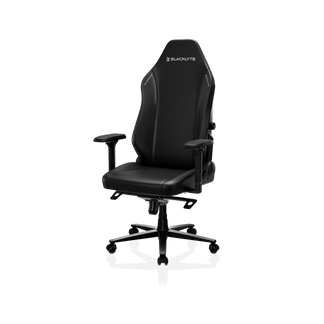
Blacklyte's current lineup includes three chairs, each engineered for extended use but calibrated for different needs and budgets. Here's how they stack up for marathon gaming sessions specifically. You can also compare all three chairs side by side on the Blacklyte comparison page.
Kraken Pro — Premium Performance
The Kraken Pro occupies the premium tier of the lineup, delivering a distinct ergonomic character through its floating lumbar system. Rather than a fixed built-in support, the Kraken Pro's lumbar mechanism has front/back depth adjustment with a fine-tune lock — it sits against your lower back with a degree of give that many long-session gamers find more natural than a rigid built-in system. The lumbar doesn't adjust on a separate height axis, but the floating behavior means it maintains contact through postural shifts without you needing to readjust.
The Kraken Pro uses high-density cold-cure contour foam across both seat and backrest, an aluminum alloy base, and the same Class 4 hydraulic gas piston found across the lineup. For gamers who want a premium, performance-tuned chair with a lumbar feel that moves with them rather than staying in a fixed position, the Kraken Pro is a compelling choice. Browse the full Blacklyte gaming chairs collection to see current colorways and configurations.
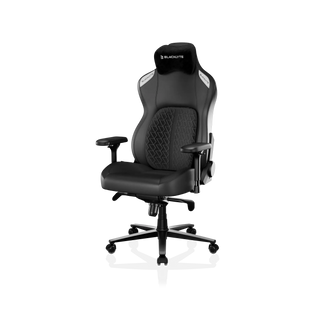
Athena Pro — The Flagship
The Athena Pro is Blacklyte's flagship chair and the most comprehensively engineered option in the lineup for long-session use. Its seat combines a memory foam layer infused with bamboo charcoal and silver ions over a contour-foam core — the memory foam adapts to your body's shape and helps regulate surface temperature, while the infusion adds natural odor control and antibacterial properties that matter over thousands of hours of use. The backrest uses contour foam throughout, shaped to maintain spinal curvature across the full range of sitting positions.
The lumbar system on the Athena Pro is built-in and mechanically adjustable in both height (up/down) and depth (front/back) — a true 4-way adjustment that lets you position support precisely at your lumbar curve rather than approximating it. Paired with high-density cold-cure foam, an aluminum alloy base, and 4D armrests across the full range of adjustments, the Athena Pro is the choice for gamers who spend the most time in their chair and want no compromises on fit or long-term comfort. Available in FlexKnit™ Fabric or DuraGen™ Leatherette.
Athena — Engineered Entry-Level
The Athena is positioned as Blacklyte's entry-level chair, but "entry-level" here refers to price tier, not engineering standard. It uses the same high-density cold-cure contour foam as the Athena Pro's contour-foam base, the same 4D armrests, the same 90°–149° recline range, and the same Class 4 hydraulic gas piston. The key differences are in the lumbar system (an external lumbar pillow rather than a built-in adjustable mechanism).
For gamers who are moving up from a budget chair and want genuine ergonomic engineering without the flagship price, the Athena delivers substantially more than its competition in the same tier. The external lumbar pillow, properly positioned just above the beltline, is effective — it simply requires a bit more attention to placement than a built-in system. Pair it with the Blacklyte accessories range to customize your setup further. If you want to understand which Blacklyte chair fits your needs, the chair comparison tool walks through the full spec breakdown side by side.
How to Set Up Your Chair for an 8-Hour Session
Even the best chair in the world underperforms if it's set up wrong. Getting the geometry right before your first long session is worth five minutes of your time and pays off across every session afterward. Start with seat height: your feet should sit flat on the floor with your knees at roughly a 90-degree angle or slightly lower than your hips. If your chair sits too low, your knees rise above your hips, which tilts the pelvis backward and flattens your lumbar curve — exactly what you're trying to avoid.
Next, set your lumbar support. Whether you're using the Athena Pro's built-in 4-way adjustable system, the Kraken Pro's floating mechanism, or the Athena's external pillow, the target is the same: the support should fill the natural inward curve of your lower back, positioned just above your beltline. Too high and it pushes your upper back forward; too low and it tilts your hips. Once the lumbar is right, adjust your 4D armrests so your elbows sit at desk height with your shoulders relaxed and not raised. Finally, set your tilt tension so the backrest responds naturally to your body weight — firm enough to support an upright gaming posture, but with enough give that a gentle lean-back doesn't require effort.
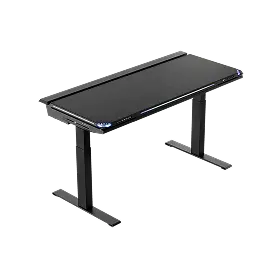
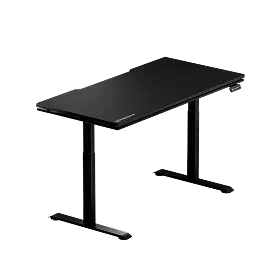
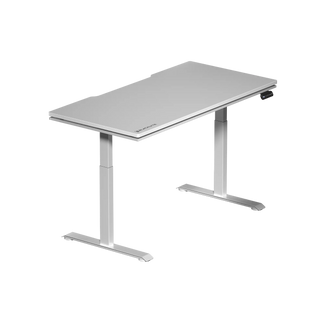
For a deeper look at ergonomic setup principles — both for gaming and work — Blacklyte's Gaming Hub and Ergonomics page cover posture optimization in detail. If you're also considering a standing desk to break up long sit-down sessions, the Blacklyte desks collection includes the Atlas and Atlas Lite Standing Desks, designed to work alongside the chair lineup as a complete ergonomic workstation.
The Bottom Line
A gaming chair for long hours isn't a category you can evaluate by looking at a product photo or scanning a bullet-point spec list. The features that determine whether hour eight feels like hour one — foam density, lumbar adjustability, armrest precision, tilt quality, and material breathability — are engineering details that either exist in a chair's design or they don't. Most gaming chairs that market themselves for long sessions were built to look the part. The ones worth your money were built to do the job.
Blacklyte's lineup — the premium Kraken Pro, the flagship Athena Pro, and the engineered-for-value Athena — represents 20 years of ergonomic development, tested across 200,000+ gamers in 50+ Countries & Regions and trusted by some of the most competitive organizations in esports. Every chair ships with free delivery, a 30-day easy return policy, and a warranty extendable up to 5 years, so your investment is protected long after the unboxing. Explore the full gaming chairs collection or browse all Blacklyte products to find the right setup for your sessions.
Ready to Upgrade Your Setup?
Have questions about which Blacklyte chair is right for your body type, gaming style, or session length? Our team is ready to help you find the right fit.
Contact Us


