












Walk into any gaming setup worth its RGB lighting and you'll almost certainly find one centerpiece that isn't a monitor or a keyboard — it's the chair. The gaming chair has evolved from a niche racing-seat novelty into a genuine ergonomic product category trusted by millions of players, streamers, and remote workers worldwide. But with so many options on the market and so much noise around what actually matters, it's easy to feel lost before you've even sat down.
This guide cuts through the clutter. Whether you're buying your first gaming chair, upgrading an aging office seat, or simply trying to understand what separates a quality gaming chair from the rest, you're in the right place. We'll break down the anatomy of a gaming chair part by part, explain what each feature actually does for your body, and give you an honest comparison with traditional office chairs — so you can make a decision that supports your posture, your performance, and your setup for years to come.
What Is a Gaming Chair, Really?
A gaming chair is an ergonomic seating solution designed specifically for extended periods of sitting — the kind that happens during long gaming sessions, streaming, content creation, or deep work. Unlike a standard dining chair or a basic desk chair, a gaming chair is engineered with adjustable support systems, reinforced structures, and materials built to handle hours of continuous use without sacrificing comfort or body alignment. The category draws aesthetic inspiration from motorsport bucket seats, which is why you'll recognize the high side bolsters, prominent headrest pillows, and low-slung profile that have become signature features of the design.
It's worth clarifying something upfront: "gaming chair" is a category descriptor, not a quality guarantee. There's a wide spectrum ranging from cheaply constructed imitations to premium, rigorously engineered chairs that rival — or surpass — the best office seating on the market. Understanding the anatomy of a gaming chair is the fastest way to tell them apart.
The Anatomy of a Gaming Chair: Every Part Explained
Every gaming chair is a system of interconnected components, and each one affects your comfort, posture, and long-term wellbeing. Here's what's actually inside — and why it matters.
Seat Base and Foam Density
The seat base is your primary point of contact with the chair, and its construction has a direct impact on how your body feels after two hours versus eight. Most gaming chairs use cold-cure foam in the seat cushion, but the density of that foam varies enormously. High-density foam (typically in the 45–60 kg/m³ range depending on the chair series) holds its shape under sustained pressure and distributes your body weight more evenly across the sitting surface, reducing pressure points at the thighs and tailbone. Lower-density foam compresses quickly, creates hot spots, and loses its supportive properties within months of regular use.
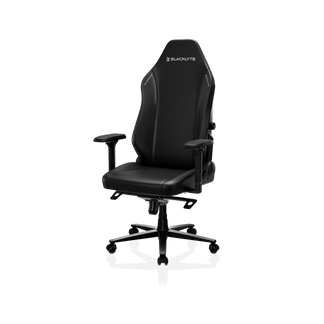
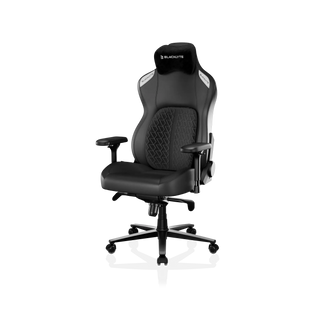
Premium gaming chairs like those in the Blacklyte gaming chair lineup pair high-density foam with contoured seat geometry that gently tilts the pelvis into a neutral position — a subtle but meaningful ergonomic detail that reduces strain on the lower spine without requiring you to consciously think about your posture.
Backrest and Lumbar Support System
The backrest is where gaming chairs distinguish themselves most clearly from ordinary seating. A well-designed gaming chair backrest follows the natural S-curve of the spine, providing support at three critical zones: the lumbar (lower back), the thoracic (mid-back), and the cervical (neck and head). The high-back design found on most gaming chairs is intentional — it supports the full length of your spine, including your neck and shoulders, which is rarely a priority in shorter office chair backs.
Lumbar support systems range from fixed foam cushions attached by a strap to advanced integrated mechanisms built directly into the chair's frame. Integrated lumbar systems are generally superior because they move with the chair's recline and maintain consistent spinal support at any angle. Many entry-level gaming chairs rely on a separate lumbar pillow, which can shift during use and require constant readjustment. If lumbar health is a priority — and it should be for anyone who sits for extended periods — look for chairs with adjustable, built-in lumbar support. Blacklyte's ergonomics philosophy, detailed on their Ergonomics page, places lumbar integrity at the core of every chair design.
Armrests: 1D, 2D, 3D, and 4D
Armrests are one of the most underrated ergonomic components in a gaming chair, and the difference between a 1D and a 4D armrest system is more significant than it might sound. The "D" refers to the number of directions in which the armrest can be adjusted:
- 1D armrests move only up and down — the most basic configuration.
- 2D armrests add forward-and-back positioning, allowing you to bring the armrest closer to or farther from your body.
- 3D armrests include lateral (side-to-side) movement as well, letting you narrow or widen the gap between armrests.
- 4D armrests add rotational pivot, so the arm pad itself can angle inward or outward to match the natural angle of your forearms while gaming, typing, or using a mouse.
Properly adjusted armrests keep your shoulders in a neutral, relaxed position and reduce the strain that travels up into the neck and upper back during long sessions. Blacklyte's chairs feature 4D armrests across the full lineup, recognizing that one-size-fits-all arm positioning simply doesn't exist when your setup, your body, and your play style are all variables.
Frame, Recline Mechanism, and Gas Lift
Beneath the foam and fabric is the skeleton of the chair: a steel frame that determines structural integrity and weight capacity. A quality gaming chair frame is typically constructed from cold-rolled steel, which offers high tensile strength without excessive weight. The recline mechanism — sometimes called a tilt mechanism — is mounted to this frame and controls how the chair rocks or reclines. Entry-level chairs often use a basic tilt lock that allows only a few fixed recline positions. Higher-end mechanisms offer multi-angle recline lock (Blacklyte's current chairs use 90° to 149°) and adjustable tilt tension, letting the seat rock slightly to match your body weight and natural movement.
The gas lift cylinder, also called a hydraulic gas piston, controls seat height adjustment. This is where the quality classification becomes critical. A Class 4 gas lift is the industry standard for heavy-duty, safety-rated performance — it's what separates chairs designed for reliable daily use from those that may fail prematurely under sustained load. Blacklyte uses Class 4 hydraulic mechanisms across their gaming chairs, ensuring consistent height adjustment and long-term structural confidence.
Upholstery Materials
The outer material of a gaming chair affects everything from breathability and temperature regulation to durability, maintenance, and feel. The three most common materials are PU leatherette, fabric, and hybrid combinations of both.
- PU leatherette offers a sleek, easy-to-clean surface and a premium aesthetic, but traditional versions can trap heat and crack over time with heavy use.
- Fabric and mesh materials prioritize breathability and are generally more comfortable in warmer environments, though they require more care to keep clean.
- Proprietary engineered materials represent the cutting edge of gaming chair upholstery. Blacklyte's FlexKnit™ Fabric is a purpose-built textile designed for enhanced breathability and durability, while their DuraGen™ Leatherette addresses the cracking and heat-retention issues found in standard PU materials — delivering the premium look of leather with improved longevity and comfort.
The right material ultimately depends on your climate, your maintenance preferences, and how much time you spend in the chair. For high-hours users, engineered materials with proven durability credentials are worth the investment.
Gaming Chairs vs. Office Chairs: The Real Differences
This is the question that comes up most often, and the honest answer is: it depends heavily on the specific chairs being compared. At the category level, though, there are meaningful structural and design differences worth understanding.
Design philosophy: Traditional office chairs are designed around a relatively neutral, upright seating position suited to desk work. Gaming chairs are designed for a wider range of postures — including slightly reclined positions that reduce spinal compression during passive activities like watching content or strategizing between rounds. The high-back design also supports the head and neck in a way that most office chairs don't.
Adjustability range: Gaming chairs typically offer more extensive adjustability than equivalently priced office chairs, particularly in recline range and armrest configuration. The 4D armrests and wide-angle recline found on premium gaming chairs are features you'd usually pay significantly more for in a traditional office chair category.
Aesthetic and identity: Office chairs are generally designed to blend into professional environments. Gaming chairs carry a more expressive visual identity — bold colorways, racing-inspired silhouettes, and branded design elements that reflect the culture of gaming and esports. For a growing number of users who work from home or stream professionally, this distinction is actually a feature, not a drawback.
Where they converge: At the premium end of both categories, the ergonomic engineering is often comparable. The idea that gaming chairs are purely aesthetic products while office chairs own the ergonomics space is an outdated generalization. Brands like Blacklyte — with 20 years of ergonomic engineering expertise and partnerships across global esports — including tournament organizer BLAST and teams such as Team Liquid and Fnatic — have spent considerable resources proving that gaming chairs can be posture-first products without sacrificing their design identity. You can explore their approach to seating ergonomics further on the Gaming Hub.
Who Should Buy a Gaming Chair?
The most accurate answer is: anyone who sits for extended periods and cares about what that sitting does to their body over time. The "gaming" label is a category name, not a restriction on who can benefit from the product. Gamers, streamers, remote workers, students, creative professionals, and anyone running a home office can find genuine ergonomic value in a well-designed gaming chair.
That said, a gaming chair makes particular sense if you want a high-adjustability seat that can accommodate multiple postures throughout the day, if you want your setup to reflect your personal style, or if you're looking for a product backed by genuine engineering credentials rather than just a marketing budget. With over 200,000 customers across 50+ countries, Blacklyte's reach tells its own story about how broadly the category has expanded beyond its original gaming-only identity. Browse the full Blacklyte product collection to see how their chairs fit into complete ergonomic setups.
What to Look for When Choosing a Gaming Chair
Armed with an understanding of how gaming chairs are built, here's what to prioritize when evaluating your options:
- Foam density: Ask about the foam specification. Higher density means longer-lasting support.
- Lumbar support type: Integrated, adjustable lumbar mechanisms outperform detachable pillows for sustained posture support.
- Armrest classification: 4D armrests offer the most flexibility for matching your unique sitting posture and desk setup.
- Gas lift class: Class 4 is the benchmark for reliability and safety under daily use.
- Upholstery quality: Look for proprietary or engineered materials with documented durability, not generic PU leatherette.
- Weight capacity and size fit: Verify that the chair's dimensions match your body proportions — seat width, back height, and weight capacity all matter.
- Warranty and support: A brand willing to back their product with extended warranty coverage (up to 5 years on chairs and desks, in Blacklyte's case) is one that's confident in how it's built.
If you're not sure which chair fits your body type and setup best, Blacklyte's chair comparison tool makes it easy to evaluate key specifications side by side across their full lineup — a genuinely useful resource for narrowing down your options before you buy.
The Bottom Line
A gaming chair is far more than a styling statement. When it's built correctly — with the right foam, a capable lumbar system, full-range armrests, a quality recline mechanism, and durable upholstery — it becomes one of the most impactful investments you can make in your long-term comfort and performance. Understanding the anatomy gives you the power to evaluate chairs on what actually matters, not just on how they look in a product photo.
The gap between a generic chair and a properly engineered one shows up in your body, often slowly but unmistakably. Choosing well from the start is the smarter path — and now you have everything you need to do exactly that.
Ready to Find Your Perfect Gaming Chair?
Explore Blacklyte's full lineup of premium ergonomic gaming chairs — engineered for posture, performance, and the long haul. Not sure where to start? Our team is here to help you find the right fit.
Contact Us Shop Gaming Chairs


