






Reclining Gaming Chairs: How Far Should a Chair Lean Back?
You spent real money on a gaming chair with a reclining backrest. But how far back should it actually go? Most gamers either pin it bolt-upright at 90 degrees because it feels "correct," or they crank it all the way back because it feels comfortable — and both extremes are quietly working against them.
The truth is that the ideal recline angle for a gaming chair isn't a single fixed number. It shifts depending on what you're playing, how long you've been sitting, and what your lumbar support is doing at any given moment. Get it right, and your chair actively reduces spinal pressure and fatigue. Get it wrong, and even the most expensive ergonomic gaming chair becomes just another source of back pain.
This guide breaks down the science of reclining — the exact angles, when to use them, what they do to your spine, and how to coordinate your recline with the rest of your setup. Whether you're grinding ranked matches or settling in for a 10-hour RPG session, there's a position built for you.
Why Recline Angle Actually Matters
The recline function on a gaming chair isn't a luxury feature — it's one of the most biomechanically important adjustments you can make. When you sit upright, your upper body weight loads directly onto your lumbar spine and intervertebral discs. The muscles in your lower back have to work constantly just to hold your torso in position, which means they're under sustained tension for as long as you're seated. Over hours, that adds up to fatigue, tightness, and the kind of dull ache that becomes familiar to anyone who games or works at a desk for long stretches.
Reclining changes this equation significantly. As ergonomic research consistently shows, opening the backrest angle transfers a portion of your upper body weight from your spine to the chair itself. The backrest begins to share the load, your spinal muscles can relax, and the compression on your intervertebral discs decreases. Even a small recline — just 10 to 15 degrees past upright — produces a meaningful reduction in lumbar strain. This is why reclining properly isn't slacking off; it's strategic posture management.
The 90-Degree Myth: Why Sitting Perfectly Upright Isn't Ideal
There's a widespread assumption that sitting at a strict 90-degree angle is the gold standard of good posture. In reality, the opposite is often true for extended sessions. Sitting bolt upright at 90 degrees places considerable compressive load on the lumbar spine and requires constant, low-level muscular effort to maintain. The position is mechanically demanding and leaves no margin for the natural micro-movements your body needs to stay comfortable and alert.
Research presented at the Radiological Society of North America, using whole-body positional MRI, found that a recline angle of 100 to 135 degrees reduces lumbar disc pressure compared to sitting upright at 90 degrees. Sitting at a strict 90-degree angle often leads to muscle fatigue during long sessions, and the instinct many gamers have to lean forward and round their shoulders is a direct consequence of staying too upright for too long. The spine needs some opening of the hip-to-torso angle to find a more neutral, relaxed position — and that's exactly what a properly set recline provides.
The Recline Angle Guide: What Each Range Does for Your Body
Not all recline is the same. Different angle ranges serve different physiological purposes, and understanding what each zone does helps you use your chair's full range intentionally rather than guessing.
90°–95°: The Starting Point (Use Sparingly)
This is essentially the upright position. It's fine as a brief reference point when you're sitting down, but it's not a position designed for prolonged use. At this angle, your spinal muscles are working at maximum load and your lumbar region receives the least support from the backrest. Most ergonomists advise moving away from 90 degrees fairly quickly once you're settled in your chair.
95°–110°: The Active Gaming Zone
This is the sweet spot for focused, desk-based gaming — particularly if you're using a keyboard and mouse. Experienced ergonomists and clinicians often recommend a functional working recline of 95° to 110°, a range where spinal load is substantially reduced while you can still maintain proper arm and head posture for typing or gaming. At 100–110 degrees, your backrest is angled slightly back, your forearms can rest naturally on the armrests, and your eyes can maintain a comfortable line of sight to your monitor without straining your neck. It reduces disc pressure meaningfully compared to 90 degrees, without pulling you so far back that precision control becomes difficult. This is the angle you want locked in for competitive matches, ranked play, or any task requiring sustained focus and quick input.
110°–135°: The Relaxed Play and Break Zone
Once you move past 110 degrees, you enter the range that's optimal for relaxed gaming, watching cutscenes, controller sessions, or deliberate recovery breaks between longer stints of play. Reclining to an angle between 110 and 135 degrees is often cited as the "neutral body posture" range — the chair's backrest takes on a larger portion of your upper body weight, significantly reducing the load on your lumbar discs, improving blood circulation, and reducing the compression of internal organs that contributes to that familiar afternoon fatigue. For breaks and recovery, this deeper recline allows the discs to rehydrate and lets overworked back muscles genuinely relax rather than just shift their load slightly.
135°–149°: Full Recline for Rest and Recovery
The deepest part of most gaming chair recline ranges is best suited for intentional rest: extended breaks, listening to music, watching a long cutscene, or simply decompressing between sessions. At this angle, desk-based gaming becomes impractical — reaching your keyboard and mouse with good arm positioning is difficult — but that's by design. Think of this zone as your spine's off-switch, a moment of deliberate physical recovery that makes the next focused gaming stint more sustainable. Research also notes that recline angles exceeding 135–140 degrees can begin shifting load toward the sacrum, so this range is best used for short recovery periods rather than hours of continuous sitting.
Matching Your Recline to Your Gaming Style
The most practical way to use recline angle guidance is to map it directly to what you're actually doing at your desk. Different gaming contexts have genuinely different ergonomic requirements, and your chair should adapt to match them rather than staying fixed at one setting for every situation.
- Competitive FPS or MOBA (mouse and keyboard, high-focus): Set your recline between 100° and 110°. You need to stay mentally sharp, react quickly, and maintain precise mouse control. A deeper recline at this point would compromise your arm positioning and pull your torso too far from the desk.
- Open-world RPG or story game (keyboard and mouse, relaxed pace): A recline between 105° and 115° works well here. You're still engaged but not under the same reactive pressure, so you can afford a touch more opening in the backrest angle while remaining in control of your inputs.
- Controller gaming (console or PC): Move to 115°–130° comfortably. With a controller in hand, you're no longer dependent on a desk surface for your inputs, so you can recline meaningfully without losing functionality. A footrest or ottoman at this angle adds additional comfort and keeps your lower body supported.
- Streaming, content review, or passive watching: 120°–135° is excellent for these modes. Your posture can open up fully, your back muscles get a genuine rest, and a cervical/neck pillow becomes especially valuable for head support at this angle.
- Active break or short rest: Use the 135°–149° range for deliberate recovery. Set a timer if you need to — five to ten minutes in this position between intense gaming sessions does meaningful work for spinal decompression and muscle recovery.
The key insight here is that dynamic sitting — deliberately changing your recline angle throughout a session — is healthier than remaining in any single fixed position, even an ergonomically optimal one. Your body is not designed for prolonged static postures, and periodically shifting between a focused 100–110° working angle and a 120–130° recovery recline keeps circulation moving and prevents the muscular fatigue that builds up silently over hours of play.
The Recline-Lumbar Connection You Can't Ignore
Recline angle and lumbar support don't operate independently — they work as a system. At a working recline of 100–110 degrees, your lumbar support is doing critical work: it's maintaining the natural inward curve of your lower spine (lumbar lordosis), which keeps disc pressure distributed evenly and prevents your lower back from flattening into that characteristic slump. Without proper lumbar contact at this angle, you lose much of the benefit that the slight recline provides.
As you recline further into the 120–135° range, the role of lumbar support shifts slightly — your body weight is increasingly supported by the full length of the backrest, but the lumbar region still needs to be in contact with the chair to prevent the lower back from flattening against the seat. This is why built-in, adjustable lumbar support is so much more effective than a one-size pillow: it can be positioned precisely to match your spine's curve across multiple recline positions rather than only supporting you at a single angle.
It's also worth noting the difference between reclining and slouching. When you recline properly, your hips stay deep in the seat, your lower back maintains contact with the lumbar support, and your entire back is in contact with the backrest as the angle opens. Slouching, by contrast, involves the pelvis rotating forward and the lower back losing contact with the chair — which actually increases disc pressure even if your backrest is angled back. The position of your hips in the seat is just as important as where the backrest sits. You can explore Blacklyte's full ergonomics resource for a deeper look at how posture and seating interact across both gaming and work setups.
Adjusting Your Monitor When You Recline
One of the most commonly overlooked consequences of reclining is what it does to your viewing angle. When your torso leans back, your eye level changes. If your monitor stays in the same fixed position, you're forced to crane your neck forward or tilt your head down to see the screen — which creates significant neck and shoulder strain that can quickly undo the benefits you've gained from reclining your backrest. This is a particularly common issue for gamers who recline past 110 degrees without making any corresponding monitor adjustment.
A general guideline is to raise your monitor by a few centimeters and tilt it back slightly for every significant recline increment. If you're moving from a 100° working angle to a 120° recovery position, your screen needs to follow your eyes rather than staying flat on the desk. A height-adjustable monitor arm makes this effortless, and it's worth treating monitor position as a dynamic adjustment rather than a one-time setup. If your gaming desk offers flexibility in how you position your display — whether through built-in mounts or surface space — make that adjustment part of how you transition between focused and relaxed positions throughout the session.
Common Recline Mistakes (and How to Fix Them)
Even gamers with high-quality chairs frequently undermine their own ergonomics through a handful of predictable recline habits. Here's what to watch for:
- Staying at 90° for hours out of habit. If you've never consciously adjusted your recline, your chair is probably sitting near upright by default. Try setting it to 100–105° as your baseline and notice the difference in lower back comfort over a long session.
- Reclining without adjusting lumbar support. If your lumbar pillow or built-in system stays positioned for an upright posture when you recline past 115°, you may lose contact with your lower back. Re-check lumbar contact every time you make a significant angle change.
- Using maximum recline for active keyboard gaming. This forces you to lean forward to reach your keyboard, which rounds your upper back and shoulders — the exact posture you were trying to avoid. Reserve full recline for controller gaming, breaks, or rest.
- Not adjusting tilt tension. The tilt tension knob controls how easily your backrest responds when you shift your weight. Too loose and you feel unstable; too tight and you can't recline comfortably. Dial it so the chair responds smoothly to gentle backward pressure and returns slowly when you lean forward.
- Forgetting to move. No recline angle, however ergonomically optimized, replaces the need to get up and move. Standing up, stretching your hip flexors, and walking briefly every 30–60 minutes keeps circulation active and prevents the chronic tension that builds even in a well-adjusted seat.
How Blacklyte Gaming Chairs Are Built for Every Recline Position
Understanding recline angles theoretically is one thing — having a chair that can execute them smoothly and hold them reliably is another. Across the full Blacklyte lineup, every chair is engineered with a 90°–149° recline range, covering the entire spectrum from focused working posture through to deep recovery recline. The 14° rocking mode built into each model's frog-type tilt mechanism adds an additional layer of dynamic movement on top of the fixed recline positions, allowing your body to shift naturally rather than being locked into static positions for long stretches. You can compare the full spec breakdown across all Blacklyte chairs to see how each model approaches these adjustments.
The Kraken Pro sits at the top of the lineup, built for gamers and professionals who demand maximum adjustability and structural durability. Its floating lumbar system can be fine-tuned and locked at your ideal front-to-back position, delivering consistent support whether you're at 100° during a competitive session or 125° during a more relaxed gaming mode. The Kraken Pro's high-density contour foam seat, aluminum alloy base, and 4D armrests — which can be adjusted in height, width, depth, and angle — make it the most precisely configurable chair in the lineup for users who want to actively manage their posture across every phase of a gaming session.
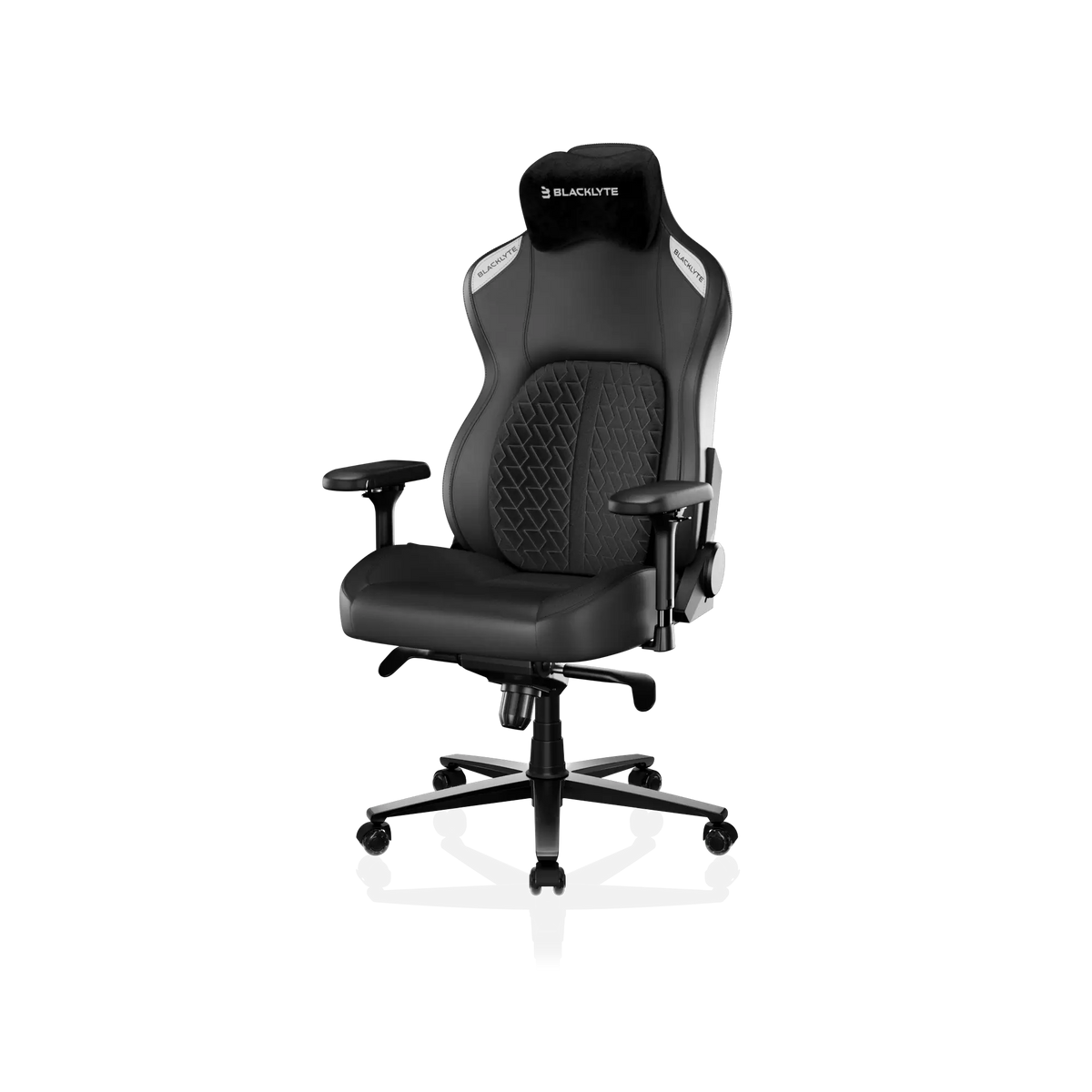
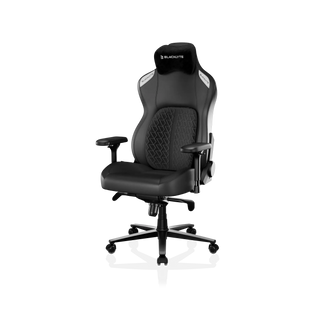
The Athena Pro serves as the flagship model, adding a built-in 4-way adjustable lumbar system with independent height and depth control — which means you can dial in your lumbar position precisely as you shift between your focused 100–110° working angle and a deeper recovery recline. The Athena Pro's seat features a dual-layer memory foam construction over a contour-foam core infused with bamboo charcoal and silver ions, providing pressure relief that adapts as you change positions. The aluminum alloy base adds rigidity and weight distribution appropriate for extended sessions, and the 4D armrests ensure your elbows and shoulders stay supported regardless of your recline position.
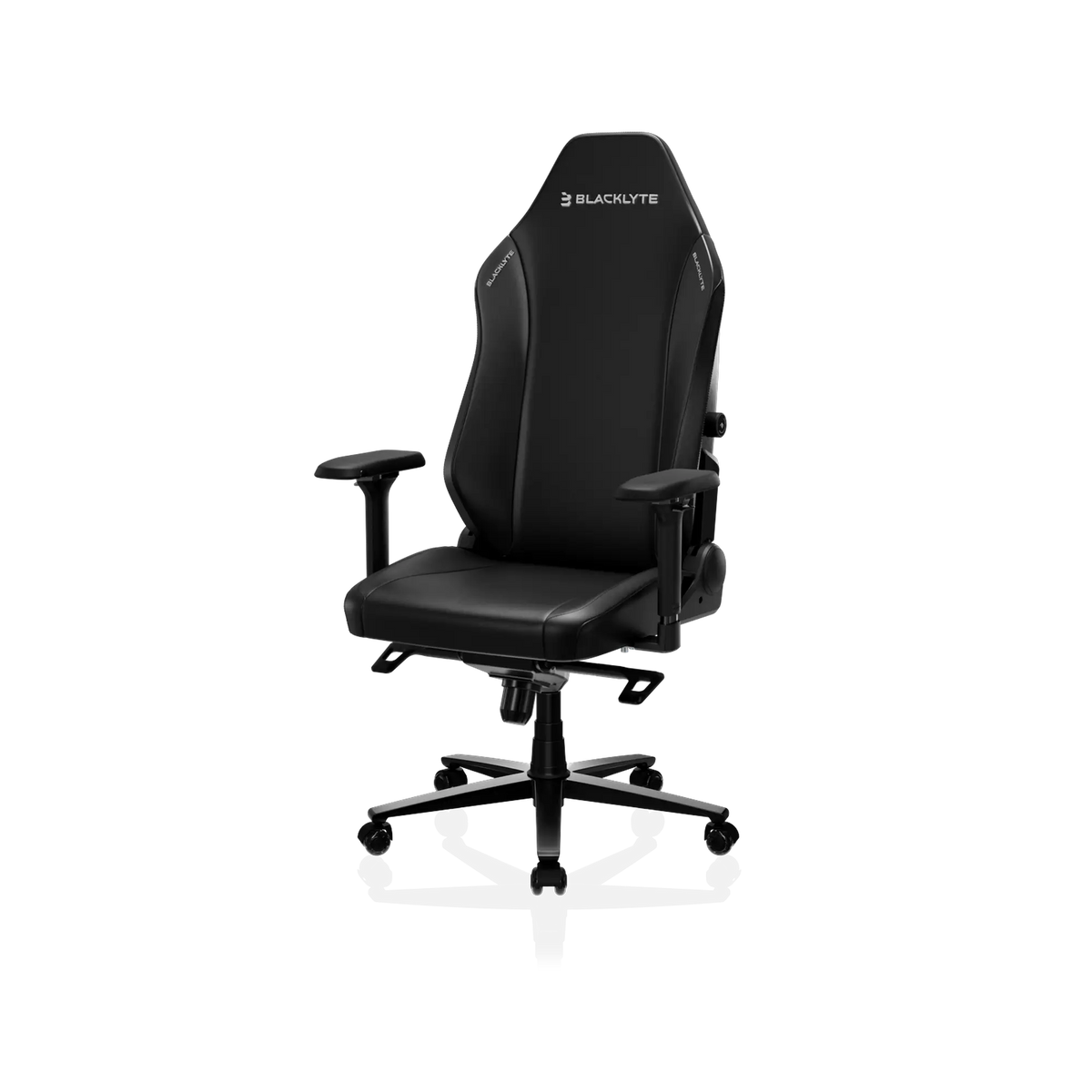
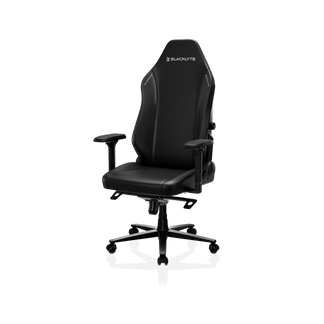
The Blacklyte Athena is the entry point into the lineup. It reclines from 90° to 149°, ships with a Class 4 hydraulic gas piston for smooth height adjustment, 4D armrests, and an external lumbar pillow that you can position to match your preferred recline angle. Its high-density contour foam seat and aluminum alloy base provide a stable, supportive foundation for gamers who want reliable ergonomics without unnecessary complexity.
All three chairs use Class 4 hydraulic gas pistons, frog-type tilt mechanisms with adjustable tilt tension, and come with a 3-year warranty extendable up to 5 years, backed by a 30-day return window and free shipping. Whether you're a casual player learning what your chair can do or a competitive gamer fine-tuning every ergonomic variable, the right recline angle is already within reach — you just need to know where to set it.
The Bottom Line: There's No Single "Right" Angle
How far should a gaming chair lean back? The honest answer is: it depends — and that variability is the point. For active keyboard and mouse gaming, 95°–110° reduces spinal load while keeping you in full control of your setup. For relaxed play, controller sessions, and passive activities, 110°–135° provides genuine spinal decompression and muscle recovery. The deepest range of your recline, up to 149° on Blacklyte chairs, is your deliberate rest position — not a default setting, but a tool for recovery.
The most important shift in thinking is moving away from "set it and forget it" posture toward deliberate, dynamic sitting. Recline for focused gaming. Recline further for breaks. Adjust your lumbar as you go. Move your monitor when you change positions significantly. Get up and walk every hour. A well-calibrated recline angle, supported by the right lumbar position and a chair built to hold both precisely, is one of the most effective ergonomic investments you can make for long-term comfort and health as a gamer.
Find Your Perfect Recline Position with Blacklyte
Ready to experience a chair engineered to support every angle — from focused gaming to full recovery recline? Explore the full Blacklyte gaming chair lineup and find the model built for how you play. Not sure which chair fits your setup? Contact the Blacklyte team — we're here to help you find your perfect fit.
Shop All Gaming Chairs | Compare Chair Models | Explore Ergonomics Hub