








Ergonomic Standing Desks: The Specs That Actually Make One Ergonomic
The phrase "ergonomic standing desk" gets used so loosely that it's become almost meaningless. Every desk that goes up and down claims the title — but height adjustability alone doesn't make a desk ergonomic any more than a padded seat makes a chair supportive. True ergonomics is about precision: the right height range, a stable frame under load, a surface large enough to keep your setup within natural reach zones, and smart features that actually encourage healthy movement throughout your day.
Whether you're building a high-performance gaming station or a focused home office, understanding the specs behind genuine ergonomic design will save you from expensive regrets. This guide breaks down every critical specification — from motor systems and frame construction to surface dimensions and software-driven posture reminders — and explains exactly what to look for and why it matters for your body.
What Actually Makes a Standing Desk Ergonomic?
Ergonomics, applied to a standing desk, is the science of fitting the workstation to the person — not the other way around. A genuinely ergonomic desk allows you to maintain a neutral body posture in both seated and standing positions: elbows at roughly 90 degrees, monitor at or just below eye level, wrists flat on the surface, and feet planted comfortably on the floor. Achieving this across different users, body types, and tasks requires a specific combination of mechanical precision, structural stability, and intelligent design features. Marketing language like "sit-stand" or "height-adjustable" describes a category; it doesn't guarantee ergonomic performance.
The specs that follow are the ones that determine whether a desk genuinely supports your body or simply moves up and down. Each one has a direct physiological consequence — which is why serious buyers should evaluate them individually rather than accepting a product description at face value.
Height Range: The Spec Everything Else Depends On
Height range is the foundational ergonomic specification of any standing desk. If the desk can't reach your ideal seated or standing height, every other feature becomes irrelevant. For seated work, most adults require a desk surface between 68–76 cm (roughly 27–30 inches) to keep elbows at a natural 90-degree angle. In standing mode, the ideal surface height climbs to approximately 95–115 cm (37–45 inches) depending on your stature — taller users and those who wear thick-soled footwear will need more range at the top end.
A desk with a height range of roughly 60–125 cm covers the overwhelming majority of users from the 5th to 95th height percentile. Anything that tops out at 118 cm or below will leave taller users hunching in standing mode — which defeats the entire ergonomic purpose. Equally important is the lower limit: if a desk bottoms out at 73 cm, petite users seated on a properly adjusted chair may find the surface too high, forcing shoulder elevation and wrist strain. When comparing desks, always check both ends of the range, not just the maximum.
Lift Mechanism and Motor Quality
The motor system is the mechanical heart of a standing desk, and its quality determines how reliably and quietly the desk will serve you over years of daily use. There are two main configurations: single-motor and dual-motor systems. Single-motor setups power both legs through a shared drivetrain — they're typically quieter at lower loads but can exhibit slight wobble under heavier configurations. Dual-motor systems drive each leg independently, delivering smoother, more balanced lifting and better stability under high loads, which matters significantly on wide desks carrying multiple monitors, a PC tower, and peripherals.
Noise level during transition is often cited by users as a quality indicator, and for good reason: a well-engineered motor at full load should operate below 50 decibels — roughly the volume of a quiet conversation. Lift speed of around 25–38 mm per second is typical for quality motors; faster isn't always better if it sacrifices torque or creates vibration. Load capacity is another critical figure — a desk used for serious gaming or content creation setups can easily carry 80–100 kg of equipment, so a rated capacity of at least 80 kg is a practical minimum. Always check whether the load rating is tested with the desk at full extension, where mechanical stress is highest.
Stability and Frame Construction
Frame stability is the ergonomic quality that users feel most immediately and remember longest. A wobbly desk at standing height isn't just annoying — it undermines concentration, makes precise mouse work frustrating, and signals mechanical wear that will worsen over time. Stability depends on a combination of factors: the gauge and profile of the steel used in the legs, the quality of the crossbeam connecting the two columns, the precision of the internal telescoping mechanism, and the footpad design that contacts the floor.
Look for desks with thick-walled steel columns (ideally triple-stage telescoping for extended range without sacrificing rigidity) and a wide, adjustable footpad system that compensates for uneven flooring. Anti-collision sensors — which stop and reverse the motor when the desk contacts an obstacle during height transitions — are both a safety feature and an indicator of electronic build quality. Desks that omit this feature are cutting corners in ways that matter. A crossbeam or H-frame base design significantly reduces front-to-back wobble compared to T-frame or C-frame alternatives, which is especially relevant for wider desktop configurations.
Surface Specs: Size, Shape, and Material
The desktop surface itself carries significant ergonomic weight. Width is the primary dimension to evaluate: a surface narrower than 120 cm forces monitors into positions that require neck rotation rather than allowing a comfortable straight-ahead gaze. For dual-monitor setups or ultrawide displays, 140–160 cm is a more appropriate target. Depth matters for focal distance — a surface shallower than 60 cm will place a standard monitor too close to the eyes, straining focus, while 70–80 cm of depth gives enough room to position the screen at the recommended 50–70 cm viewing distance.
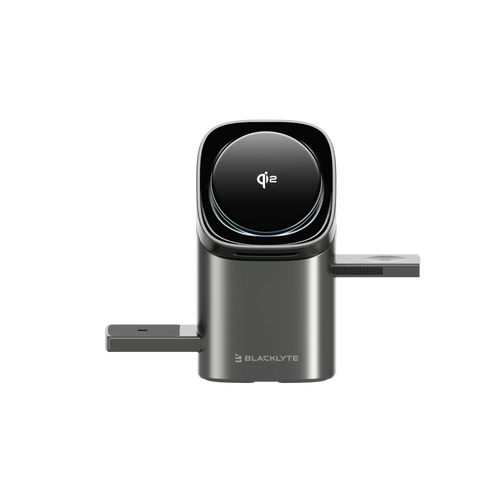
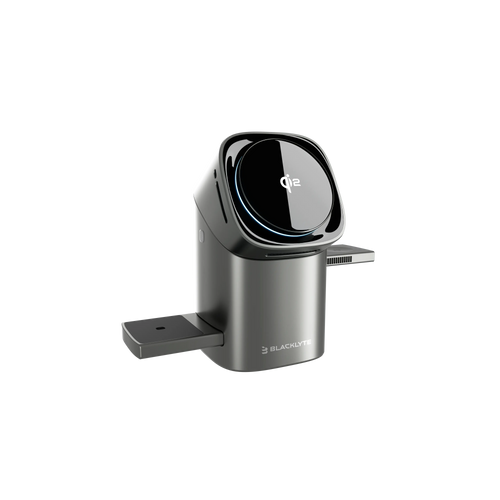
Material choice affects both durability and ergonomic comfort. MDF cores with a PVC or melamine finish are common at the entry level and can perform well if the density and edge treatment are adequate. Higher-end surfaces use thicker MDF or solid composite cores with rounded or waterfall edges that reduce pressure on wrists during typing — a detail that adds up significantly over long sessions. Surface texture matters too: a slightly matte, low-glare finish reduces eye strain from reflected overhead lighting, while an overly glossy finish can create visual fatigue during extended work. Some premium desks also integrate magnetic surfaces or wireless charging pads directly into the desktop — features that reduce cable clutter and contribute to a cleaner, more focused workspace.
Smart Features That Support Ergonomic Habits
Hardware gets you to the right position; smart features keep you there habitually. A programmable height memory panel — one that stores at least two or three preset heights for your seated and standing positions — dramatically reduces friction when transitioning throughout the day. Without presets, the minor inconvenience of manually adjusting height is enough for most people to simply stop using the standing function, which eliminates the primary ergonomic benefit of the desk entirely.
Sit-stand reminder timers, built into higher-end control panels or companion software, prompt users to alternate positions at set intervals. Research consistently shows that the health benefits of a standing desk are only realized through regular alternation — not through standing all day, which carries its own musculoskeletal risks. Desks with integrated software that tracks usage patterns, sends alerts, and even controls height through a connected device take this a step further. When the technology actively supports the behavior change, users are measurably more consistent. Ambient features like programmable LED lighting, while often seen as aesthetic, also serve a functional ergonomic role by reducing harsh overhead glare and creating a more visually comfortable workspace environment.
Cable Management and Workspace Organization
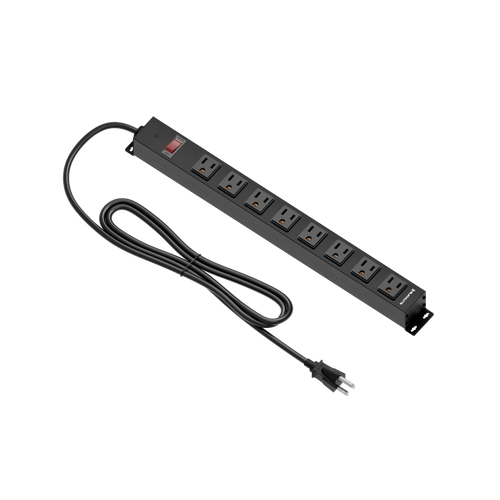
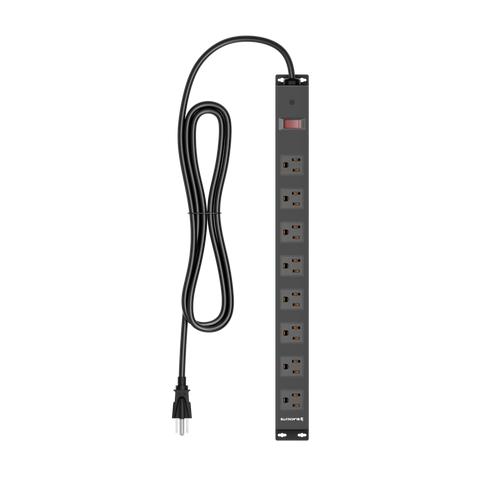
Cable management is rarely listed as an ergonomic spec, but a cluttered desk surface is an ergonomic liability. When cables sprawl across the work surface, they restrict where peripherals can be placed, force awkward reaching motions, and create visual noise that contributes to cognitive fatigue. A well-designed standing desk addresses this systematically: through integrated cable trays under the surface, cable grommets routed through the desktop, wire channels along the frame legs, and in some cases, built-in power distribution units that reduce the number of cables running to the floor.
This matters especially during height transitions. A desk that rises and falls repeatedly will tangle and stress cables that aren't properly managed — potentially damaging peripherals or, in the worst case, creating a tripping hazard as slack piles on the floor. Desks with integrated power strips built into the surface edge solve much of this at the source, allowing devices to be plugged in close to where they're used rather than relying on long runs to a wall outlet. It's a detail that distinguishes a desk designed for daily use from one designed to look good in a product photograph.
Why Your Desk and Chair Must Work Together
An ergonomic standing desk only delivers its full benefit when paired with an equally well-specified chair for seated periods. The seated phase of a sit-stand routine still accounts for the majority of most people's work time, and a chair that lacks proper lumbar support, adjustable armrests, or correct seat height will undermine everything the desk provides. The relationship is mechanical: your chair's seat height determines the optimal desk height when seated, which in turn affects your monitor position, keyboard angle, and wrist alignment. If the chair can't be set to the right height for your body, the desk's precise height adjustment becomes a moot point.
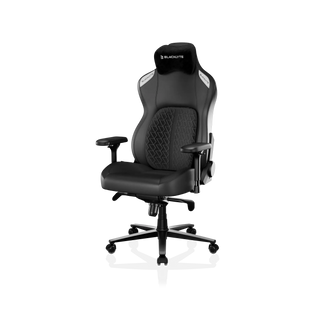
This is why ergonomic setups are best considered as systems rather than individual products. A height-adjustable desk with a three-stage range, paired with a chair offering a proper seat height range, 4D armrests, and quality lumbar support, creates a setup where every variable can be dialed in precisely. Mixing a premium desk with a poorly adjusted or anatomically unsupportive chair is like calibrating a monitor to perfect color accuracy and then placing it in a room with the wrong lighting. The chain is only as strong as its weakest link. For a deeper look at how to set up your full workstation for postural health, Blacklyte's ergonomics guide walks through every adjustment point in detail.
How Blacklyte Standing Desks Deliver on Every Spec
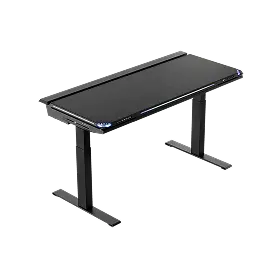
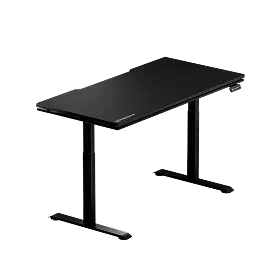
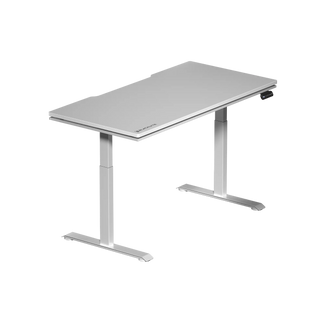
Blacklyte's standing desk lineup — the Atlas Desk and Atlas Lite — was engineered with the same performance-driven philosophy behind the brand's gaming chairs. Both desks feature dual-motor lift systems that deliver smooth, quiet height transitions across a generous range capable of accommodating users from the shortest to the tallest end of the spectrum. Frame construction uses heavy-gauge steel columns — triple-stage telescoping on the Atlas and two-stage on the Atlas Lite — with a stable crossbar configuration, minimizing wobble even at full extension under demanding loads.
The Atlas Desk goes further with integrated features that address the full ergonomic picture: a built-in power strip with AC outlets reduces cable clutter at the source, a magnetic surface supports easy monitor and accessory placement, and programmable RGB lighting through Blacklyte's proprietary Atlas Driver software lets users set height presets, configure sit-stand reminders, and manage their full desk environment from a single interface. Cable management is handled through integrated routing channels along the frame, keeping transitions clean and the surface unobstructed.
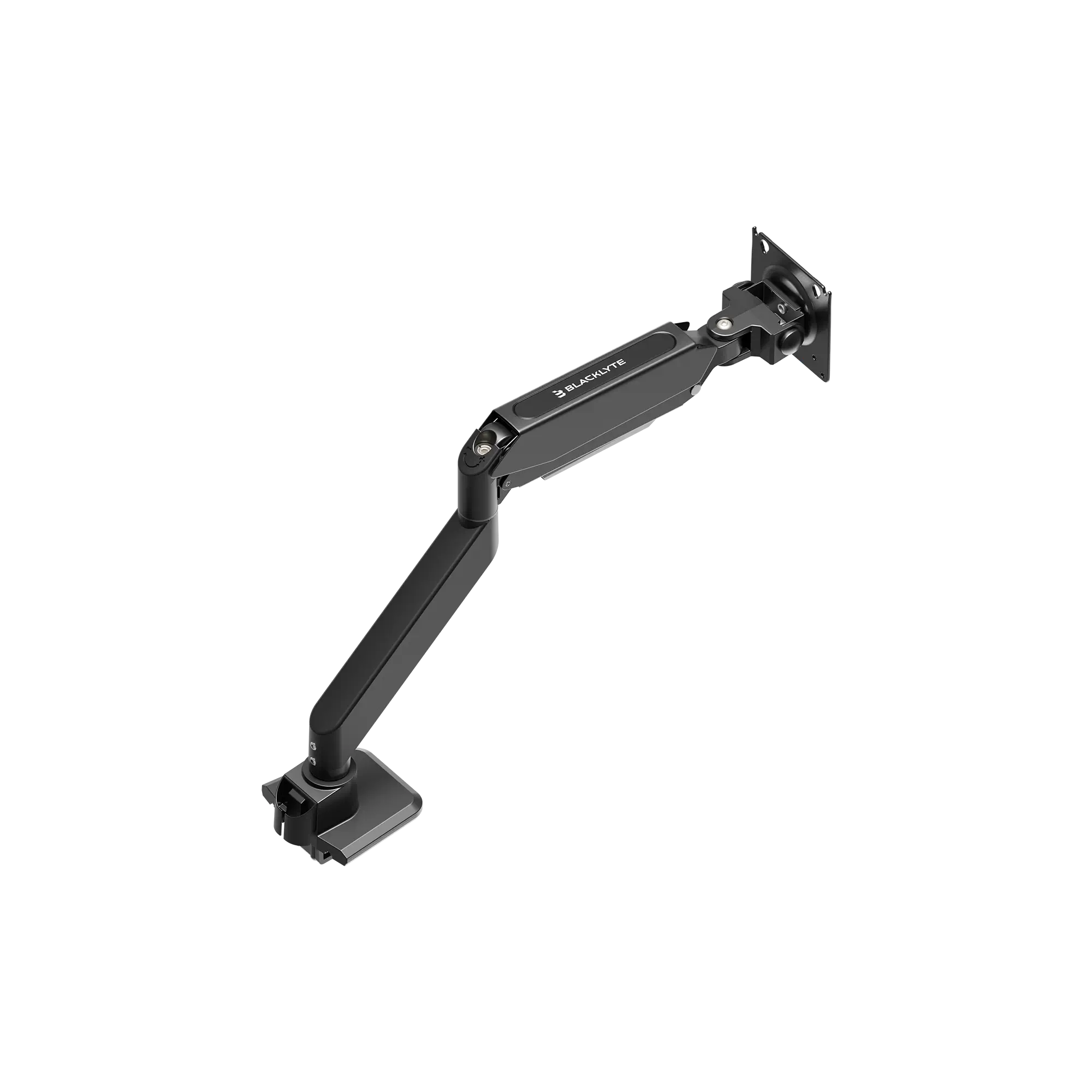
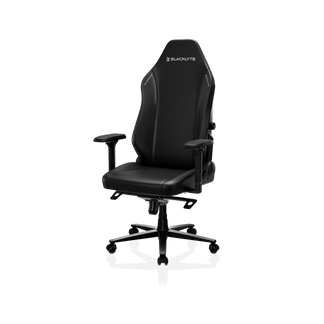
When combined with any chair from Blacklyte's gaming chair collection — which includes 4D armrests across the full lineup, Class 4 hydraulic gas pistons, and model-specific lumbar systems ranging from the Athena's external lumbar pillow to the Athena Pro's built-in 4-way adjustable lumbar support — the result is a complete workstation system calibrated for posture, performance, and endurance. You can also use Blacklyte's desk comparison tool to evaluate the Atlas and Atlas Lite side by side across every key specification. For those building or upgrading a full setup, the accessories collection adds the final ergonomic and organizational layers to complete the picture.
The Bottom Line
A standing desk earns the label "ergonomic" through specifics, not marketing language. Height range that genuinely fits your body, a dual-motor system that lifts smoothly and holds steady under load, a surface deep and wide enough for healthy monitor placement, smart preset and reminder systems that make alternating positions effortless, and integrated cable management that keeps the workspace organized — these are the criteria that separate a desk that supports your posture from one that simply moves up and down.
The good news is that you don't have to guess or compromise. When you know what to look for, the right choice becomes clear. Evaluate every spec with your specific body, setup, and daily routine in mind, and invest in a desk that will still be pulling its ergonomic weight years from now. Your posture — and your productivity — will reflect that decision every single day.
Ready to build your ideal ergonomic setup? Explore the full Blacklyte lineup — from the Atlas and Atlas Lite standing desks to gaming chairs engineered for all-day posture support — or reach out to the team with your specific setup questions.