






Leather Gaming Chairs: Real, PU, and Hybrid Materials Compared
Walk into any conversation about gaming chair materials and it won't take long before the word "leather" comes up. But here's the thing: not everyone using that word is talking about the same material. The chair listed as "premium leather" at one end of the market and the one listed as "real leather" at the other can be made from completely different substances with wildly different performance profiles, price points, and lifespans.
This guide breaks down the three main leather-type materials found in gaming chairs today — real (genuine) leather, PU (polyurethane) leather, and hybrid/engineered leatherette — across every dimension that matters for long-session gaming: durability, breathability, maintenance, feel, and long-term value. Whether you're outfitting a competitive battlestation or upgrading a home office setup, understanding what your chair is actually covered in will help you make a decision you won't regret two years from now.
What Do We Actually Mean by 'Leather' in Gaming Chairs?
The term "leather" has become something of a catch-all in the gaming chair market. Walk through any product listing and you'll encounter genuine leather, top-grain leather, PU leather, vegan leather, bonded leather, leatherette, and hybrid leather — sometimes applied to chairs at completely different price points with very little transparency about what separates them. Genuine leather is the only one derived directly from animal hide in its full, unprocessed form. Everything else is either a synthetic imitation, a processed remnant, or an engineered composite. The distinction matters enormously because each material ages, breathes, and wears in fundamentally different ways.
The confusion is partly by design. Marketing language tends to blur the lines between materials, so it pays to understand what you're actually sitting on before you invest in a chair you'll use for thousands of hours. Let's go through each category clearly.
Real (Genuine) Leather: The Premium Benchmark
Genuine leather — particularly full-grain and top-grain varieties — represents the gold standard for upholstery durability and long-term aesthetics. Full-grain leather retains the entire outer surface of the hide, making it the most structurally dense and durable form available. Top-grain leather has the surface sanded slightly for a more uniform finish, trading a small degree of structural integrity for a more consistent look. Both develop a characteristic patina with age, a quality unique to real animal hide that synthetic materials simply cannot replicate.
From a practical standpoint, genuine leather genuinely earns its premium pricing. Well-maintained full-grain leather can retain the vast majority of its structural integrity over many years of heavy daily use, making it one of the most cost-effective long-term investments in chair upholstery when the maintenance commitment is respected. It also offers natural breathability — real hide contains pores, which means it moves moisture more freely than most synthetic alternatives. The trade-off is that it requires regular conditioning to prevent drying and cracking, it is significantly more expensive than any synthetic option, and it remains relatively rare in mass-market gaming chairs precisely because of those cost and weight considerations.
Genuine leather also has hypoallergenic properties worth noting. Unlike synthetics, it doesn't rely on the chemical binding agents and plasticizers that can off-gas during the first weeks of use. For gamers with sensitive skin or known synthetic material sensitivities, real leather is the cleanest option from a material chemistry standpoint. That said, the entry price for a genuine leather gaming chair that uses quality-grade hide (not low-grade bonded scraps) typically starts well above the mid-market range, which puts it outside reach for many buyers.
Real Leather: Quick Summary
- Durability: Excellent — can last decades with proper care; develops patina rather than peeling
- Breathability: Good — natural pores allow moderate airflow compared to synthetics
- Maintenance: Moderate to high — requires periodic conditioning and gentle cleaning
- Price: High — significantly more expensive than PU or hybrid options
- Best for: Buyers who prioritize longevity and aesthetics and are willing to invest in maintenance
PU Leather: The Industry Standard — and Its Limits
PU leather (polyurethane leather) is the most common upholstery material in the gaming chair market by a significant margin. It's a synthetic material made by applying a polyurethane coating to a fabric backing — sometimes over a thin split-leather base, sometimes over pure textile. The result is a surface that mimics the look and feel of genuine leather at a fraction of the cost and with minimal maintenance requirements. It's easy to wipe clean, comes in a broad range of colors and textures, and delivers the sleek, premium-looking aesthetic that defined the racing-style gaming chair aesthetic from the beginning.
The limitations of PU leather, however, become apparent over time. The layered construction that makes it easy and inexpensive to manufacture is also its structural weakness. Standard PU leather is prone to hydrolysis — a chemical breakdown caused by the interaction of moisture (sweat) and heat — which progressively weakens the bond between the polyurethane surface layer and the fabric backing. In practical terms, this means cracking, flaking, and peeling, particularly in high-contact zones like armrest edges, seat bolsters, and the upper backrest. The quality of PU leather varies enormously across grades, and lower-grade PU can begin showing surface degradation within 18 to 24 months of regular daily use.
Breathability is the other major conversation point. Because the polyurethane surface layer is essentially non-porous, PU leather functions as a semi-seal against airflow. During long gaming sessions — especially in warm environments — this creates noticeable heat and moisture buildup at contact points. Higher-grade PU leathers and some micro-perforated variants improve on this, but even premium PU doesn't reach the breathability of genuine leather, let alone fabric or mesh. For gamers in warm climates or those who run hot naturally, this is a genuine comfort consideration rather than a minor inconvenience.
It's also worth noting the difference between standard PU leather and bonded leather, sometimes used interchangeably in low-cost chair marketing. Bonded leather is made from ground leather scraps mixed with polyurethane and applied to a fabric backing. It contains only a small fraction of real leather content and combines the worst traits of both worlds: it peels more aggressively than quality PU, lacks the durability of genuine leather, and offers no meaningful performance advantage. If you see "bonded leather" in a spec sheet, treat it as a red flag rather than a quality indicator.
PU Leather: Quick Summary
- Durability: Variable — quality-grade PU lasts 3–5 years; budget PU may begin peeling within 1–2 years
- Breathability: Low — non-porous surface traps heat and moisture during long sessions
- Maintenance: Low — easy wipe-clean surface, no conditioning required
- Price: Low to mid — the most accessible leather-look option on the market
- Best for: Buyers who prioritize ease of cleaning, aesthetics, and value; best in climate-controlled rooms
Hybrid and Engineered Leatherette: The Best of Both Worlds
The most significant development in gaming chair upholstery over the last several years has been the rise of engineered hybrid leatherette — materials that retain the sleek, wipeable aesthetic of PU leather while addressing its core structural and performance weaknesses. Unlike standard PU, which is built on a relatively simple two-layer system, premium hybrid leatherettes use multi-layer composite constructions with reinforced fiber bases, modified polymer coatings, and in some cases surface micro-texturing designed to improve both flex resistance and airflow.
What sets quality engineered leatherette apart from conventional PU is durability under sustained mechanical stress. The reinforced base structures used in top-tier proprietary materials dramatically reduce the delamination risk that causes PU peeling. Some manufacturers have subjected their engineered leatherettes to millions of cycles of abrasion testing, and the results show performance characteristics that approach genuine leather in structural terms while still offering the easy maintenance of a synthetic. This makes them particularly well-suited to the demanding environment of gaming chairs, where the upholstery endures constant friction, weight loading, and temperature cycling session after session.
Breathability in hybrid leatherette is generally improved compared to standard PU, though it still doesn't match genuine leather or open-weave fabric. The surface modifications and backing structures allow marginally better moisture vapor transfer, which reduces (though doesn't eliminate) the heat-buildup issue associated with sealed synthetics. For most gamers in moderate climates with climate control, this represents a meaningful upgrade over standard PU in terms of long-session comfort. Hybrid leatherette also tends to feel slightly softer and more supple to the touch than rigid PU, lending it a tactile quality closer to genuine leather.
The value proposition for engineered leatherette is strong for anyone who wants leather aesthetics without the maintenance demands of genuine hide and without the peeling risk of standard PU. It sits in the middle of the price range — more expensive than budget PU but considerably less than genuine leather — and its extended durability often translates to better cost-per-year ownership value than either extreme. It's the material category where most serious gaming chair investment is currently concentrated, and where proprietary formulations from premium brands tend to differentiate most significantly.
Hybrid/Engineered Leatherette: Quick Summary
- Durability: High — engineered composites with reinforced bases significantly reduce peeling and delamination
- Breathability: Moderate — improved over standard PU; still below genuine leather or fabric
- Maintenance: Low — retains PU's wipe-clean simplicity with no conditioning needed
- Price: Mid to upper-mid — premium over standard PU but well below genuine leather
- Best for: Gamers who want long-term durability, a premium look, and low upkeep without the cost of real leather
Side-by-Side Comparison: Real vs. PU vs. Hybrid Leatherette
| Factor | Real (Genuine) Leather | PU Leather | Hybrid / Engineered Leatherette |
|---|---|---|---|
| Durability | Excellent — decades with care | Variable — peeling risk within 1–3 yrs | Very good — reinforced structure resists delamination |
| Breathability | Good — natural pores allow airflow | Low — non-porous, traps heat | Moderate — improved over PU |
| Maintenance | Moderate — needs conditioning | Low — wipe clean only | Low — wipe clean, no conditioning |
| Spill Resistance | Good — wipes clean easily | Excellent — non-porous surface | Excellent — engineered surface coating |
| Peeling Risk | None (cracks if dried out) | High — especially with heat and sweat | Low — engineered to resist delamination |
| Price | High | Low to mid | Mid to upper-mid |
| Feel / Texture | Supple, develops character over time | Smooth, slightly stiff | Soft, supple — close to genuine leather |
| Environmental/Ethical | Animal-derived | Fully synthetic (vegan) | Fully synthetic (vegan) |
Why the Material Underneath Matters Just as Much
Surface upholstery gets most of the attention in gaming chair comparisons, but the foam layer beneath it is equally critical to long-term performance. No matter how durable or breathable your leatherette is, a low-density foam core will compress and lose support over time, leaving you sitting on an effectively flat seat that offers none of the ergonomic benefits you paid for. The outer material and the inner foam work together as a system, and evaluating one without the other gives an incomplete picture.
For any leather-style gaming chair you're considering, look closely at the foam specification. High-density cold-cure foam holds its shape under repeated compression and body heat cycling, meaning the chair provides consistent support after two years of daily use, not just on day one. This matters especially when paired with PU or hybrid leatherette, because the surface heat retention of those materials can accelerate foam degradation over time in lower-density constructions. A premium outer material covering compromised foam is ultimately a poor investment.
Similarly, it's worth considering how the chair's ergonomic hardware interacts with the upholstery. Features like built-in lumbar systems, multi-axis armrests, and a quality tilt mechanism affect posture management in ways that upholstery cannot — and the best chair for long gaming sessions is one where all these systems work together. The right upholstery complements ergonomic engineering; it doesn't substitute for it. You can explore how these elements come together by checking out Blacklyte's ergonomics resource hub for more on how seating science applies to both gaming and work environments.
Which Material Is Right for Your Gaming Setup?
The honest answer is that the right material depends on how you game, where you game, and what you're optimizing for. There's no universally superior option across every use case, which is precisely why understanding the differences matters. Here's a practical framework for making the decision:
- You game in a climate-controlled room and want minimum maintenance: Quality hybrid engineered leatherette is the strongest choice. It delivers genuine-leather aesthetics, resists peeling, and requires nothing more than an occasional wipe-down.
- You run hot, live in a warm climate, or game for 6+ hours at a stretch: Breathability becomes a priority. Real leather has the best breathability of the three leather-type materials. If you're open to a non-leather material, a high-performance woven fabric like Blacklyte's FlexKnit™ Fabric option offers superior airflow alongside ergonomic support.
- You want the best possible long-term value and can commit to upkeep: Genuine leather, assuming quality full-grain or top-grain hide, will outlast any synthetic by a significant margin with proper conditioning and care.
- You want the most accessible price point with decent aesthetics: Mid-to-high-grade PU leather is a reasonable choice, provided you buy from a brand that specifies grade or has engineered its PU for improved durability. Avoid chairs that list "bonded leather" as a feature.
- Pets, kids, or high-spill environments: Engineered leatherette or quality PU wins here for spill resistance and easy cleanup. Keep sharp objects and claws away from any leather-type surface, as scratches in any variant are difficult to repair.
Whatever material you choose, also evaluate the chair's broader ergonomic specification. The upholstery is the first thing you see and feel, but lumbar support design, armrest adjustability, seat foam quality, and frame construction ultimately determine whether the chair supports your posture through a full session or just looks good in a product photo. If you want to compare chair specifications side by side, Blacklyte's chair comparison tool lays out the key parameters across the full lineup in one place.
How Blacklyte Approaches Chair Upholstery
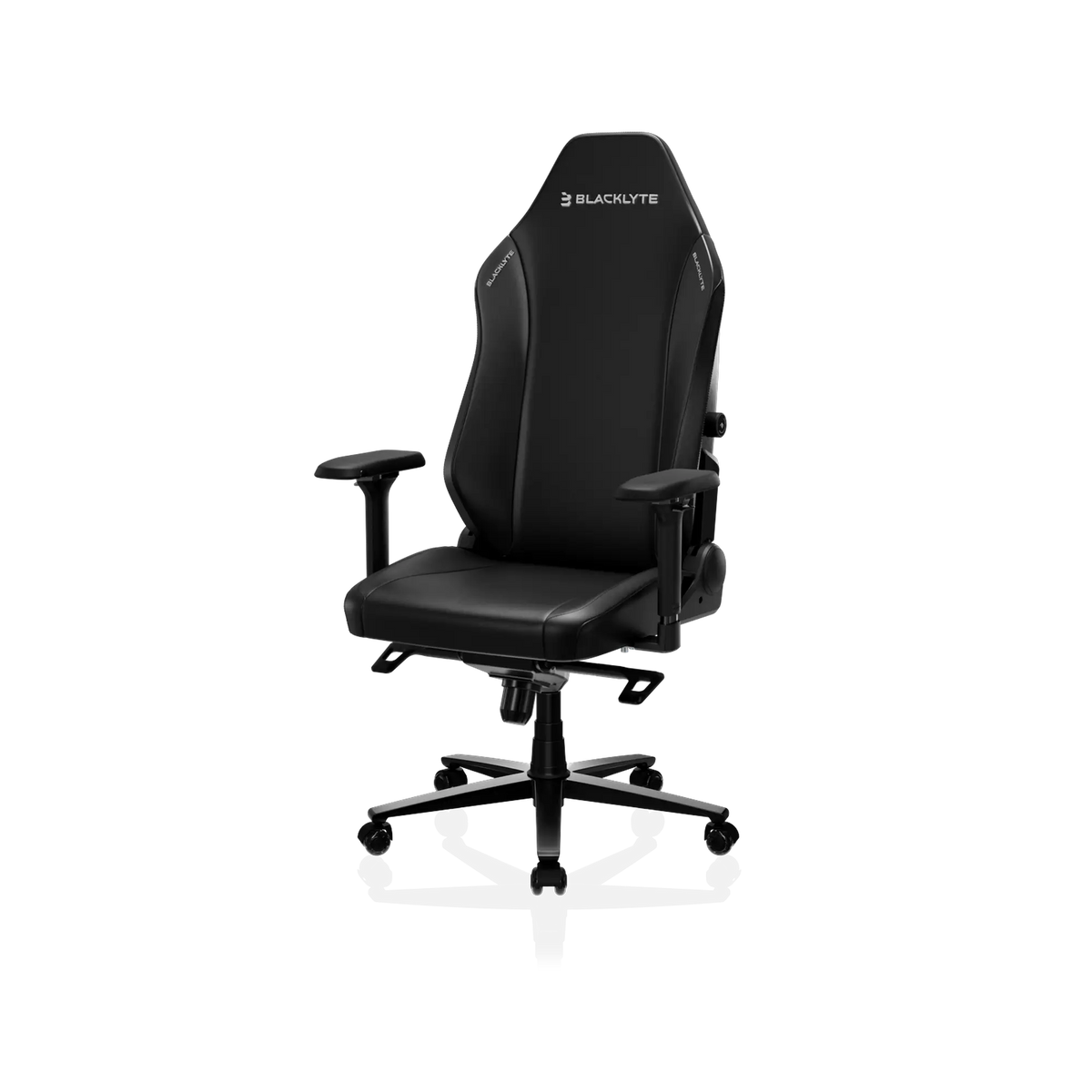
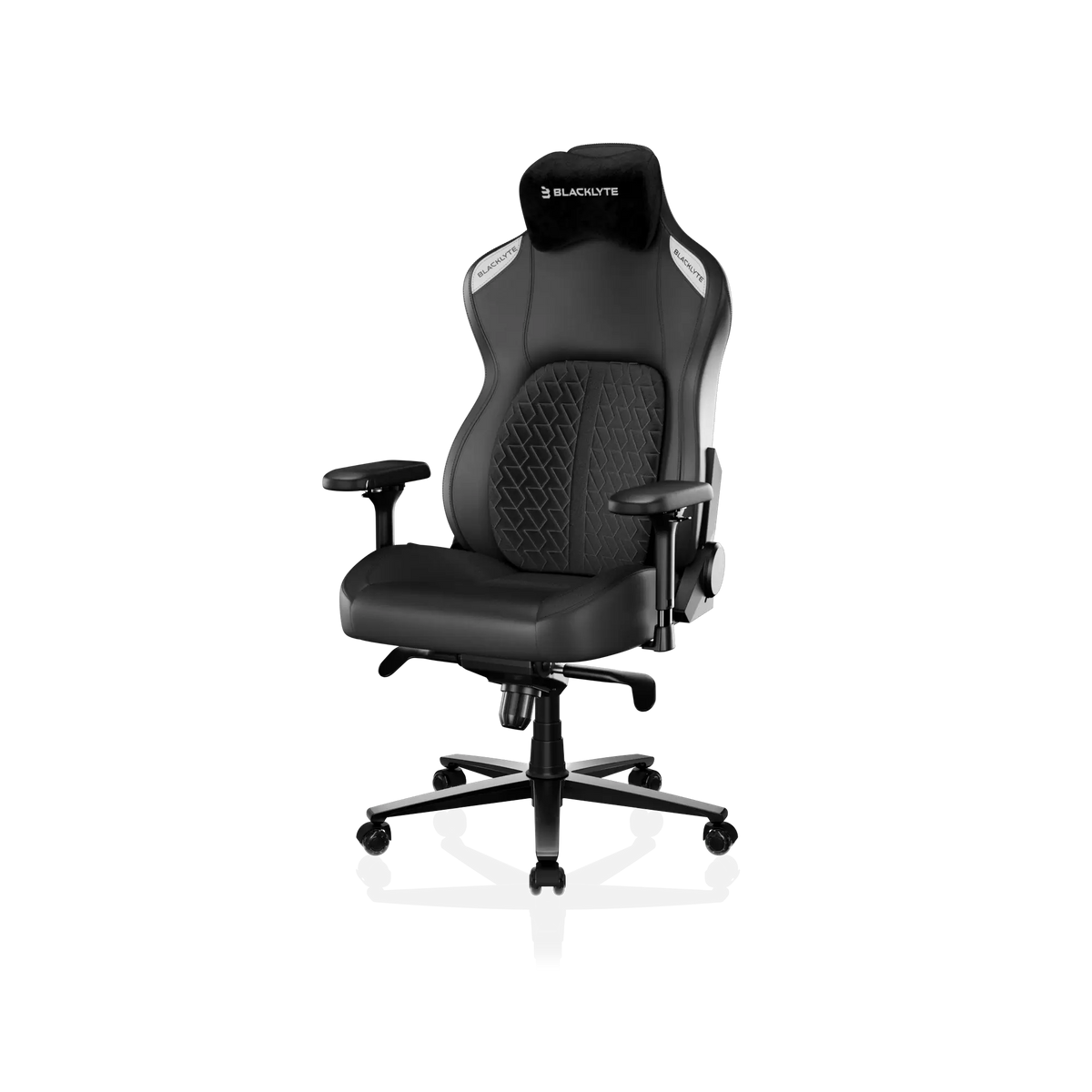
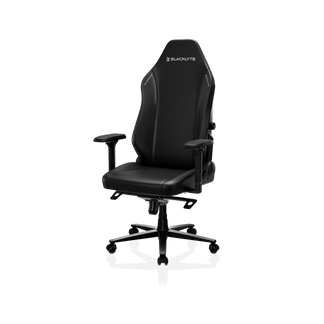
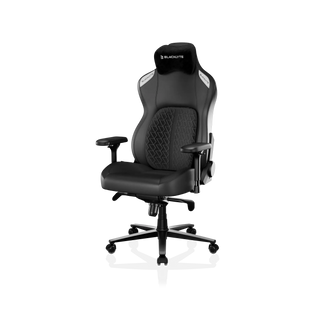
Blacklyte's DuraGen™ Leatherette is the proprietary hybrid material used across the brand's leatherette gaming chair lineup. It was developed as a direct response to the peeling and durability issues that have long plagued standard PU leather in gaming chair applications. Rather than relying on a conventional two-layer polyurethane-over-fabric construction, DuraGen™ uses an engineered composite structure designed to resist the delamination and surface cracking that typically emerge in high-contact zones after extended use.
The material pairs with Blacklyte's high-density cold-cure foam — formulated between 45 and 60 kg/m³ depending on the chair series — to create a seating surface that holds its shape and support characteristics over years of daily use, not just the first few months. The Kraken Pro premium chair uses contour foam seats paired with the DuraGen™ Leatherette surface. The Athena Pro, Blacklyte's flagship chair, goes a step further with a memory foam layer over a contour-foam core in the seat — infused with bamboo charcoal and silver ions for improved hygiene and pressure distribution. The Athena entry-level chair also uses contour foam seats paired with DuraGen™ Leatherette.
Across all three current chair models, every chair ships with 4D armrests, a Class 4 hydraulic gas piston for height adjustment, and a recline range of 90° to 149°. Lumbar support varies by model: the Kraken Pro includes a built-in floating lumbar with front/back fine-adjustment and lock, the Athena Pro features a built-in 4-way adjustable lumbar system with both up/down and front/back control, and the Athena uses an external lumbar pillow. For buyers evaluating the full picture of upholstery quality alongside ergonomic engineering, the Blacklyte Gaming Hub offers practical guidance on how seating setup impacts in-game performance and long-session comfort.
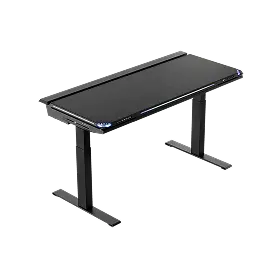
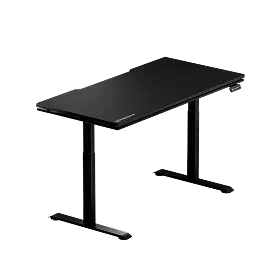
For anyone who prefers breathable fabric over leatherette, Blacklyte's FlexKnit™ Fabric is the alternative — a woven textile engineered for airflow and durability in equal measure, available on select chair configurations. You can explore the full lineup and filter by material, size, and ergonomic feature set at the Blacklyte gaming chairs collection. If a standing desk to complement your setup is also on the radar, the Blacklyte desks range includes height-adjustable options with integrated cable management and smart lighting controls.
The Bottom Line
Real leather, PU leather, and hybrid engineered leatherette are genuinely different materials with different performance profiles — and the right choice depends on your priorities, your environment, and how long you expect to own the chair. Real leather offers unmatched longevity and breathability but demands maintenance and premium investment. Standard PU leather is accessible and easy to clean but carries real peeling risk over time, especially with heavy use. Engineered hybrid leatherette occupies the pragmatic middle ground: durable, low-maintenance, leather-looking aesthetics without the cost of genuine hide or the long-term degradation risk of budget PU.
Whatever you choose, pair it with a chair that gets the ergonomic fundamentals right — quality foam, a properly adjustable lumbar system, full-range armrests, and a reliable mechanical base. The upholstery is what you feel first. The engineering underneath is what keeps you comfortable, supported, and pain-free session after session.
Ready to Find the Right Chair for Your Setup?
Explore Blacklyte's full lineup of gaming chairs — featuring DuraGen™ Leatherette and FlexKnit™ Fabric options, engineered with 20+ years of ergonomic expertise and trusted by 200,000+ gamers across 50+ Countries & Regions.
Shop Gaming ChairsContact Us