










Finding a genuinely sturdy gaming chair as a heavier person is harder than it should be. Most chair listings lead with aesthetics, bold color accents, or celebrity endorsements — and bury the structural details you actually need in a footnotes table. Weight capacity ratings vary wildly across the market, foam densities are rarely disclosed, and base materials are often listed only as "reinforced" with no further clarification. For anyone over 200 lbs (or significantly taller than average), those omissions aren't a minor inconvenience — they're the difference between a chair that lasts three years and one that starts creaking at the joints within six months.
This guide cuts through the marketing language and focuses on what heavy users actually need to evaluate: structural load ratings, frame and base materials, foam core density, gas piston class, and the ergonomic adjustments that make a chair work for a larger body — not just look good in a product photo. We'll walk through each critical component, explain why it matters under sustained weight, and show you how Blacklyte's current chair lineup is engineered to hold up where it counts.
Why Weight Capacity Is More Than Just a Number
A chair's stated weight capacity is often the first — and only — spec heavier buyers check, but the number itself tells an incomplete story. A rating of 250 lbs or 300 lbs reflects a static load test under controlled conditions, not the cumulative stress of someone shifting, reclining, leaning sideways, or dropping into the chair after a tense gaming session. The real question is what's underneath that rating: what materials are carrying the load, and how are they joined together?
A chair rated at 300 lbs with a hollow steel frame and plastic weld points will behave very differently over time than one rated at the same capacity with a reinforced cold-rolled steel shell and precision-welded joints. Similarly, a high-density foam seat compressed daily by a heavier user will break down at a rate entirely dependent on its density and core construction — not the number printed on a box. Weight capacity is a starting point, not a guarantee. Build quality is what backs it up.
Key Structural Components That Determine Build Quality
Frame and Base Construction
The internal shell frame is the skeleton of any gaming chair, and for heavy users it's the component most likely to show stress over time. Lower-tier chairs use thin stamped metal or plastic-composite shells that flex under sustained load — fine for a 160 lb user, problematic for someone at 250 lbs who sits for four to six hours a day. A properly engineered frame uses cold-rolled steel or aluminum alloy throughout the structural zones, with reinforced weld points at the seat-to-base connection and backrest pivot.
The five-star base is equally important and often overlooked. Nylon or polypropylene bases are common at the entry level and they can crack under repeated load stress, especially if the chair sits on hard flooring where lateral force is transferred more directly into the base legs. Aluminum alloy bases offer a significantly better strength-to-weight ratio and don't develop the micro-fractures that plastic bases accumulate over time. In Blacklyte's lineup, the Kraken Pro, Athena Pro, and Athena all use an aluminum alloy five-star base.
The Hydraulic Gas Piston
The gas piston (sometimes called a gas lift or cylinder) controls seat height adjustment, and for heavier users it's a component that deserves specific attention. Class 3 pistons are standard on budget chairs and are rated for lower sustained loads — they're also more prone to slow sinking under heavy continuous use. Class 4 hydraulic gas pistons are the appropriate standard for heavier users: they're rated for higher sustained loads, maintain height adjustment more reliably over time, and are less likely to drift downward mid-session.
All Blacklyte gaming chairs use Class 4 hydraulic gas pistons as standard. This isn't a premium-only feature in their lineup — it's a baseline engineering decision that reflects the brand's commitment to structural reliability across every tier. For heavy users evaluating any chair, confirming the gas piston class is a straightforward but genuinely important due diligence step that many buyers skip entirely.
Seat Foam and Core Construction
Foam breakdown is one of the most common complaints from heavier gaming chair users, and it's almost entirely a function of foam quality and core construction. Within limits, denser foam resists compression fatigue better over time — but it's a trade-off rather than a linear upgrade, since higher density also makes the foam firmer. The goal is a well-tuned balance of durability and comfort, not simply the highest number.
For heavier users, very low-density budget foam (roughly 25–35 kg/m³) will typically show noticeable compression (the "bottoming out" sensation) within a year of regular use. Chairs designed with heavier users in mind use high-density cold-cure foam cores that maintain their shape and support under sustained load. Blacklyte's seat construction varies by model: the Kraken Pro and Athena use a high-density contour foam core, while the flagship Athena Pro pairs memory foam over a contour-foam core (infused with bamboo charcoal and silver ions) — the only model in the current lineup to include memory foam in the seat. The backrest cushioning across all models uses contour foam, not memory foam. A properly engineered high-density core translates directly to how long the seat maintains its support profile under the weight of a larger user.
Upholstery Durability Under Load
Upholstery might seem like an aesthetic consideration, but for heavy users it's a structural one. Cheaper PU leather has a tendency to crack and peel at stress points — seat edges, side bolster curves, and armrest caps — within 12 to 18 months of heavy use, because the backing fabric isn't substantial enough to handle repeated flexing under load. The quality of the stitching, the thickness of the material, and the substrate behind it all determine how well the surface holds up over time.
Blacklyte uses two proprietary materials across their chair lineup. DuraGen™ Leatherette is their engineered leatherette, developed for abrasion and flex resistance rather than just softness. FlexKnit™ Fabric, available on select models, offers a breathable woven alternative with strong tensile properties. Both materials are designed to resist the edge cracking and delamination that plagues standard PU covers on chairs used by heavier or more active sitters.
Ergonomics Built for Larger Frames
Lumbar Support Systems
Lumbar support becomes especially critical for heavier users because added weight increases the compressive force on the lower spine during prolonged sitting. A lumbar pillow tied to the backrest with a strap works as a basic solution but offers limited positional precision — you're adjusting it by untying and repositioning, rather than dialing it in. Built-in lumbar mechanisms allow for more repeatable, precise adjustment without interrupting your session.
Blacklyte's three current models each handle lumbar differently, which is worth understanding before you buy. The Athena uses an external lumbar pillow — practical and easily repositioned, though less precise than a built-in system. The Kraken Pro features a built-in floating lumbar with front-to-back depth adjustment and a lock, giving you control over how much the lumbar presses into the lower back. The Athena Pro goes furthest with a built-in 4-way adjustable lumbar that moves both up/down and front/back, allowing you to dial in support for your specific spinal curvature and torso length. For heavier users with lower back strain, the Athena Pro's adjustability is the most targeted solution in the lineup. You can explore how these systems compare side by side on Blacklyte's chair comparison page.
Armrests and Adjustability
Fixed or 2D armrests on a gaming chair are a compromise even for average-sized users, but they become a genuine ergonomic problem for heavier users with broader shoulders or larger arms, where the neutral elbow position rarely aligns with where a static armrest happens to land. 4D armrests — adjustable in height, depth (forward/back), lateral width, and pivot angle — allow a much broader range of users to find a position that actually offloads shoulder and neck tension rather than adding to it.
Across the full Blacklyte lineup, all three current chair models ship with 4D armrests as standard. This is not a flagship-only feature. Combined with the chairs' seat height range (adjustable via the Class 4 hydraulic gas piston), a heavier user with a broader build has genuine flexibility to configure the chair around their actual body rather than adjusting their posture to fit the chair. Blacklyte's ergonomics resource page provides additional guidance on optimizing your setup for long sitting sessions.
Blacklyte Gaming Chair Lineup Compared for Heavy Users
Understanding how the three models stack up against each other in the specific context of a heavier user helps narrow the decision quickly. Here's a practical breakdown:
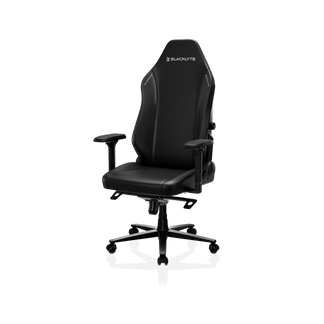
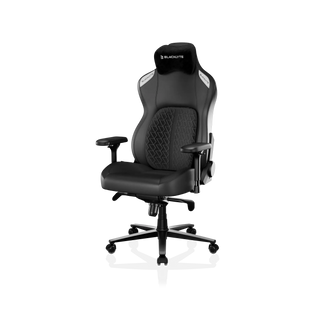
- Kraken Pro (Premium): Aluminum alloy five-star base, high-density contour foam seat, built-in floating lumbar with depth adjust and lock, 4D armrests, Class 4 hydraulic gas piston, 90°–149° recline. The aluminum base and floating lumbar system make this a high-end pick for users who want a more dialed-in back support experience.
- Athena Pro (Flagship): Aluminum alloy five-star base, memory foam over contour core (infused with bamboo charcoal and silver ions), built-in 4-way adjustable lumbar (up/down and front/back), 4D armrests, Class 4 hydraulic gas piston, 90°–149° recline. The most comprehensively engineered option for heavier users who prioritize long-session comfort and the most adjustable lumbar system in the lineup.
- Athena (Entry-Level): Aluminum alloy five-star base, high-density contour foam seat, DuraGen™ Leatherette or FlexKnit™ Fabric upholstery, 4D armrests, external lumbar pillow, Class 4 hydraulic gas piston, 90°–149° recline. A solid structural foundation for a first serious gaming chair, with the foam construction to hold up under heavier use.
All three chairs share the same tilt mechanism — a frog-type tilt with adjustable tension — and the same recline range. The meaningful differences for a heavier user come down to base material, foam construction, and lumbar adjustability. You can compare full specifications on Blacklyte's chair parameter comparison page, or browse the complete gaming chair collection directly.
What to Avoid When Buying a Gaming Chair as a Heavy Person
A few red flags appear repeatedly in chairs that fail heavier users within their first year of use. Keeping these in mind during your research will save you a frustrating return process and a second purchase:
- Unverified or vague weight ratings: "Up to 300 lbs" without any detail on how that figure was tested or what materials support it is a warning sign, not a reassurance.
- Class 3 gas pistons: These are adequate for lighter users but prone to slow sinking and faster wear under heavier continuous loads. Always confirm Class 4.
- Nylon or plastic five-star bases: They're lighter and cheaper to manufacture, but they accumulate stress fractures under repeated heavy use, especially on hard floors.
- Low-density budget foam (roughly 25–35 kg/m³): Foam in this range compresses quickly and loses its support profile well before the rest of the chair wears out, leaving you sitting on what feels like a flat board.
- Non-adjustable or 2D armrests: For broader builds, fixed armrests almost never land in the right position and create secondary strain at the shoulder and neck over long sessions.
- Generic PU leather with no material specification: Standard PU leatherette on budget chairs cracks at high-stress contact zones within 12–18 months of daily heavy use.
Final Verdict: Matching the Chair to Your Build
For heavier gamers, the best chair isn't necessarily the most expensive one — it's the one engineered with enough structural integrity and foam density to perform reliably over years of sustained use rather than months. The shortlist of what actually matters is shorter than most buying guides suggest: Class 4 hydraulic gas piston, a steel or aluminum alloy base, high-density cold-cure foam, quality upholstery material, and enough lumbar and armrest adjustability to fit your specific proportions.
Blacklyte's lineup is built to these standards across all three current models, with meaningful differences in foam construction and lumbar sophistication as you move up from the Athena to the Athena Pro. If you're a heavier user gaming or working for four or more hours daily, the Athena Pro's memory foam seat and 4-way lumbar system offer the most comprehensive long-session support. If your priority is a structurally sound step up from a basic chair at the premium tier, the Kraken Pro delivers the aluminum base and built-in lumbar without the flagship price point. And if you're starting from a chair that's already letting you down, the Athena's high-density contour foam and aluminum alloy base are a meaningful structural upgrade over most similarly-positioned options on the market.
Backed by 20 years of ergonomic engineering expertise and trusted by over 200,000 gamers across 50+ Countries & Regions — including partnerships with tournament organizer BLAST and teams like Team Liquid and Fnatic — Blacklyte designs chairs for the demands of real competitive and extended-use environments. Chairs and desks are covered by a warranty extendable up to five years, with free shipping and a 30-day return policy on every order. Visit the full gaming chair collection or use the chair comparison tool to find the right fit for your size and setup.
Weight capacity labels alone won't tell you how a gaming chair will hold up under a larger frame two years from now. What matters is the engineering behind the number: the foam density that resists compression fatigue, the gas piston class that holds height reliably, the base material that doesn't develop stress fractures, and the lumbar system that actually adjusts to your body rather than a theoretical average. Evaluate those components first, and the right chair becomes a much easier choice to make with confidence.
Ready to find the right gaming chair for your build? Our team can help you match your weight, height, and usage requirements to the right Blacklyte model. Contact us here — or browse the full lineup at Blacklyte Gaming Chairs.


