











Walk into any gaming setup — from a casual living room to a professional esports arena — and the chair is almost always the piece of furniture that defines the space. It signals how seriously someone takes their gaming, and more importantly, how long they plan to stay seated. But with four genuinely different categories of video game chairs on the market, choosing the wrong type doesn't just affect your comfort. It can affect your posture, your reaction time, and how you feel after a four-hour session.
Floor chairs, rocker chairs, racing chairs, and ergonomic gaming chairs each serve a distinct purpose for a distinct type of gamer. Some are built for casual console play from across the room. Others are engineered for competitive PC gaming where every adjustment matters. Understanding the differences isn't just useful — it's the foundation of a smarter buying decision.
This guide breaks down all four types honestly, compares them head-to-head across the factors that actually matter, and helps you figure out which one belongs in your setup.
What Is a Video Game Chair?
A video game chair is any seating solution designed specifically around the demands of gaming — whether that means supporting a reclined console player on the floor or keeping a PC gamer properly aligned through an eight-hour ranked session. The category is broader than most people realize. It spans everything from simple cushioned floor pads to highly engineered ergonomic chairs used by professional esports athletes. What unites them is intent: they are built with gaming posture, gaming duration, and gaming environment in mind.
The four main types — floor, rocker, racing, and ergonomic — aren't competing versions of the same product. They are fundamentally different tools for fundamentally different gaming contexts. The right question isn't "which one is best?" but rather "which one is right for how I game?"
Floor Gaming Chairs: Ground-Level Comfort for Casual Play
Floor gaming chairs are exactly what they sound like: low-profile seats designed to be used directly on the floor, with no legs, no wheels, and no height adjustment. They typically come in two forms — structured back-support chairs that fold flat for storage, and cushion-style seats that are little more than padded backrests. Some models include additional features like built-in speakers, vibration motors, or basic recline positions, while entry-level versions are simple and stripped back.
The appeal is straightforward. Floor chairs are the most affordable type of video game chair by a significant margin, they're lightweight and easy to move around, and they suit a very specific gaming context well: console gaming in a living room or bedroom, played from a distance, often in a relaxed or semi-reclined position. If you're gaming on a TV from across the room with a controller in your lap, a floor chair delivers exactly the kind of casual, low-investment comfort that makes sense for that use case.
The trade-offs, however, are real. Floor chairs offer minimal ergonomic support compared to any elevated alternative. Sitting without hip-level height means your thighs aren't supported properly, your hips can tilt backward over time, and your lower back loses its natural curve. For short, infrequent sessions, this is manageable. For anyone gaming regularly or for extended periods, a floor chair will likely start to cause discomfort — particularly in the lower back and hips — before a conventional chair would. They are also completely unsuitable for PC gaming at a desk.
Best for: Casual console gamers, kids and teens, and anyone who wants an affordable, low-profile seat for shorter sessions in front of a TV.
- Typically the most budget-friendly option across all chair types
- Portable and often foldable for storage in small spaces
- Some models include built-in speakers and Bluetooth connectivity
- No height adjustment — sitting position is fixed at floor level
- Limited ergonomic support; not suited for long sessions or PC gaming
Rocker Gaming Chairs: Built for Console Sessions
Rocker gaming chairs sit on the floor like floor chairs, but they introduce one key distinction: a curved base that allows the chair to rock gently forward and backward. This rocking motion might sound like a minor detail, but it creates a noticeably different experience — one that many console gamers find more natural and engaging than a completely static floor seat. The gentle motion reduces the fatigue of sitting in a fixed position and adds a subtle sense of immersion that suits longer TV-based sessions.
Like floor chairs, rockers are designed for use away from a desk. Users rest their legs along the floor rather than supporting their weight on a raised seat, which means they share some of the same ergonomic limitations. The seat height isn't adjustable, and the reclined viewing angle that makes rockers so comfortable for TV gaming makes them poorly suited for PC gaming, where you need to sit upright and interact with a keyboard and mouse at desk level.
Where rockers stand apart from basic floor chairs is in build quality and feature depth. Mid-range and premium rocker models often include padded armrests, adjustable backrests with multiple locking positions, lumbar support cushions, and — perhaps most distinctively — built-in audio systems with speakers positioned near the headrest and subwoofer vibration that pulses with in-game audio. This gives rocker chairs a genuinely immersive quality that simple floor chairs can't match, and it makes them a popular choice for multiplayer console setups where several players are seated side by side.
Best for: Console gamers who want more immersion than a basic floor chair, multiplayer setups, and anyone who prefers a relaxed TV-viewing angle with some built-in entertainment features.
- Curved rocking base provides gentle motion that reduces seated fatigue
- Many models include built-in speakers and subwoofer vibration for immersive audio
- Not height-adjustable — seat position is fixed at floor level
- Rocking motion can make it uncomfortable to use near a desk or keyboard
- Better ergonomic support than basic floor chairs, but still limited compared to elevated chairs
Racing Gaming Chairs: Style-First, Desk-Ready
Racing gaming chairs are the most visually recognizable category in the market. Their design borrows directly from motorsport bucket seats — high backrests with prominent side bolsters, bold colorways with contrasting stitching, and a sleek, tilted silhouette that communicates speed and performance even when the chair is empty. This aesthetic has dominated the gaming chair market for over a decade, largely because it photographs well and plays perfectly on stream. When someone pictures "a gaming chair," this is almost always what they see.
Unlike floor and rocker chairs, racing chairs are elevated on a five-star wheeled base with a height-adjustable gas piston, placing them firmly in the desk-gaming category. They come with armrests (typically 2D or 3D adjustable on mid-range models), a recline function, tilt mechanisms, and some degree of lumbar support — usually in the form of a removable lumbar pillow that can be repositioned along the backrest. They are genuinely suitable for PC gaming and represent the entry point for anyone who wants a proper desk setup with the classic gaming aesthetic.
The honest limitation of traditional racing chairs is that their design philosophy prioritizes visual impact over biomechanical precision. The bucket seat shape — with its pronounced side wings — was designed to hold racing drivers tightly in high-G turns. At a desk, those wings can restrict shoulder movement and apply lateral pressure to the thighs. Removable lumbar pillows, while adjustable, tend to shift during longer sessions and don't respond dynamically to posture changes the way a built-in lumbar system does. For casual-to-moderate gaming sessions, these trade-offs are minor. For serious, extended play, they start to matter.
Best for: PC gamers who want a desk-height chair with a bold aesthetic, streamers who want a visually striking setup, and gamers whose sessions typically run under four hours.
- Instantly recognizable motorsport-inspired design with strong visual appeal
- Elevated on a wheeled base — compatible with standard gaming desks
- Height-adjustable via gas piston mechanism
- Lumbar support is typically cushion-based rather than integrated into the backrest structure
- Bucket seat side bolsters can restrict movement during long sessions at a desk
- Wide price range: entry-level models start around $100–$150, while premium versions exceed $400
Ergonomic Gaming Chairs: Engineered for Long-Session Performance
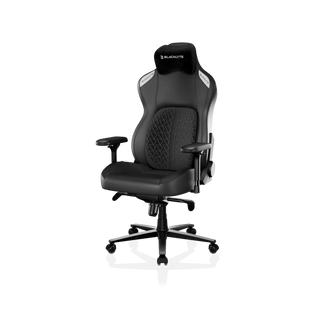
Ergonomic gaming chairs represent a more recent evolution of the category, and they address the central limitation of the racing style directly: what happens to your posture after four, six, or eight hours of continuous sitting? Where racing chairs lead with aesthetics and add ergonomics as a secondary consideration, true ergonomic gaming chairs lead with biomechanical engineering and build the design around that foundation. The result is a chair that performs differently under sustained use — and that difference becomes more significant the longer you sit.
The key distinguishing features of a well-built ergonomic gaming chair are adjustability depth and support integration. Rather than relying on removable pillows, premium ergonomic chairs incorporate lumbar support systems directly into the backrest structure, with adjustment that lets you fine-tune where the support sits and how firmly it presses. Armrests are fully 4D-adjustable — moving up and down, forward and back, side to side, and rotating — so your forearms are genuinely supported rather than just resting somewhere nearby. The seat foam is engineered to maintain its support profile over time rather than compressing and flattening through repeated use. And the tilt and recline systems are tuned to allow natural postural micromovement rather than locking you into a single fixed angle.
For competitive gamers, streamers, and anyone who spends significant time at their desk, the ergonomic chair category offers something that no other type can match: the ability to sit longer with less accumulated strain. This is why professional esports organizations have moved toward ergonomic gaming chairs for their players, and why the lines between "gaming chair" and "ergonomic office chair" have increasingly blurred at the premium end of the market. The best chairs in this category do both jobs well.
Breathability is also worth noting here. Many premium ergonomic gaming chairs are now available in engineered fabric upholstery in addition to leatherette, which allows for significantly better airflow during extended sessions compared to the synthetic leather that dominates the racing chair category.
Best for: PC gamers with long daily sessions, competitive and professional players, streamers, work-from-home setups, and anyone who experiences back, neck, or shoulder discomfort from extended sitting.
- Lumbar support is built into the backrest structure with adjustable positioning — not reliant on a removable pillow
- 4D armrests provide precise positioning for wrist and shoulder support
- Seat foam engineered for long-term durability and consistent support profile
- Tilt and recline systems designed to accommodate natural posture movement
- Often available in fabric as well as leatherette upholstery for different breathability preferences
- Appropriate for both gaming and professional work use
Side-by-Side Comparison: Which Type Wins Where?
Every chair type has a context in which it performs best. The table below cuts through the noise and gives you a direct comparison across the dimensions that actually matter for most gamers.
| Feature | Floor Chair | Rocker Chair | Racing Chair | Ergonomic Chair |
|---|---|---|---|---|
| Primary Use | Casual console | Console / TV gaming | PC desk gaming | PC gaming + work |
| Height Adjustable | No | No | Yes | Yes |
| Desk Compatible | No | No | Yes | Yes |
| Lumbar Support | Minimal | Cushion / basic | Removable pillow | Built-in, adjustable |
| Long-Session Support | Poor | Moderate | Good | Excellent |
| Posture Engineering | None | Basic | Moderate | Advanced |
| Typical Price Range | $30 – $150 | $60 – $300 | $100 – $500+ | $300 – $700+ |
| Aesthetic Impact | Low | Low–Moderate | Very High | High |
Which Type Is Right for You?
The best way to choose between chair types is to be honest about how you actually game — not how you plan to game or how you game on ideal days. Your primary platform, your average session length, and whether you're working from the same setup during the day are the three variables that matter most.
Choose a Floor or Rocker Chair If:
- You game almost exclusively on a console, sitting back from a TV with a controller
- Your sessions are typically casual and under two hours
- Budget is the primary constraint and you don't need a desk-height seat
- You're buying for a younger player who games on the floor
Choose a Racing Chair If:
- You game at a desk and want the classic gaming aesthetic
- Sessions run two to four hours and posture fatigue isn't yet a major issue
- You're new to premium gaming furniture and want an established style at a variety of price points
- Visual presence in your setup or on stream is an important consideration
Choose an Ergonomic Gaming Chair If:
- You game at a desk for four or more hours per day
- You also use your setup for work, study, or content creation
- You've experienced back, neck, or shoulder discomfort from extended sitting
- You want a chair that performs consistently for years without the support profile degrading
- You're a competitive or professional player who treats equipment quality as a performance variable
It's also worth noting that the lines between racing and ergonomic chairs have genuinely blurred at the premium tier. The best chairs today combine bold, setup-defining aesthetics with serious ergonomic engineering — meaning you don't have to sacrifice one for the other. That convergence is exactly where Blacklyte operates.
Blacklyte's Approach: Where Ergonomics Meets Esports
Blacklyte was built on the premise that serious gamers — and the professionals who compete at the highest level — deserve chairs that deliver on both dimensions. Not just visually striking, and not just ergonomically competent, but genuinely excellent at both. That philosophy drives every engineering decision behind the Blacklyte gaming chair lineup.
Kraken Pro Gaming Chair
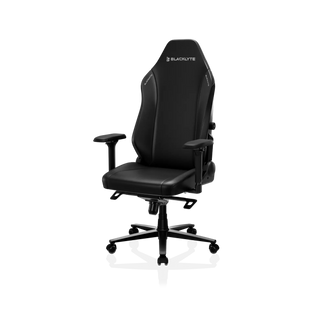
The Kraken Pro is Blacklyte's highest-priced chair at $649, and it's engineered for players who spend the most time in their seat. The Kraken Pro's Dynamic Air Lumbar Support System is a floating lumbar mechanism with front-to-back fine adjustment and a locking function that holds your preferred position precisely — built directly into the backrest, not strapped on as an afterthought. High-density memory foam in the seat provides firm, durable support that maintains its shape over time. 4D armrests are standard across the lineup, allowing full multi-directional adjustment so your arms are properly supported regardless of your desk height or reach. The base is an aluminum-alloy five-star, running on a Class 4 hydraulic gas piston for smooth, reliable height adjustment. DuraGen™ Leatherette upholstery comes in black only, giving the Kraken Pro a clean, setup-defining look that photographs well and wears durably.
Recline range runs from 90° to 149°, with a frog-type tilt mechanism offering 0°–14° of rock and adjustable tilt tension — enough range to shift your posture comfortably during longer sessions without feeling like you're falling backward. The steel internal frame provides structural rigidity, while the aluminum-alloy base keeps the overall aesthetic premium. A 3-year warranty comes standard, extendable up to 5 years.
Athena Pro Gaming Chair
The Athena Pro at $499 is Blacklyte's flagship chair, and it introduces several features that make it the standout choice for gamers who want the broadest range of ergonomic adjustability. Its 4-Way Built-in Adjustment lumbar system moves both up and down and front to back — giving you independent control over both the vertical position and the forward pressure of your lumbar support. This makes it particularly effective for users who spend time switching between gaming and desk work, as you can dial in a different support profile for each activity.
The Athena Pro's seat uses upgraded dual-layer memory foam: an ultra-soft memory foam top layer over a high-density polyurethane core infused with carbon and silver ions for durability and hygiene. The result is a seat that feels immediately comfortable and holds that comfort profile across extended sessions. The Athena Pro is available in either FlexKnit™ Fabric or DuraGen™ Leatherette upholstery, making it the only Blacklyte chair currently offered in a fabric variant — and the only one available in white (a DuraGen™ Leatherette colorway). 4D armrests, Class 4 hydraulic gas piston, aluminum-alloy five-star base, and the same 90°–149° recline and 0°–14° tilt rock as the Kraken Pro are all included. The 3-year warranty is extendable up to 5 years.
If you're deciding between the two, the Blacklyte chair comparison tool makes it easy to weigh each model's specifications directly. Both chairs are positioned firmly in the ergonomic gaming chair category — designed for serious desk-based gaming and dual-purpose work setups — and both reflect Blacklyte's partnerships with tournament organizer BLAST and esports organizations including Team Liquid, Fnatic, and Team Spirit.
For a complete look at the full Blacklyte lineup, including desks and accessories engineered to complement your chair, visit the All Products page. If you want to understand the ergonomic principles behind the chair design, the Gaming Hub covers everything from sitting mechanics to setup optimization for competitive play.
The Bottom Line
Floor and rocker chairs are purpose-built for casual console gaming — they're affordable, relaxed, and well-matched to shorter sessions in front of a TV. Racing chairs bring the classic gaming aesthetic to desk setups with broad price accessibility and strong visual appeal. Ergonomic gaming chairs are the serious choice for anyone who spends significant time in their seat, combining advanced posture engineering with the performance-oriented design that competitive and dedicated PC gamers need.
None of these categories is universally superior. They solve different problems. The key is matching your chair type to your actual gaming habits — your platform, your session length, your setup — rather than defaulting to the most visually impressive option. For most PC gamers who take their performance and comfort seriously, an ergonomic gaming chair isn't just the most comfortable long-term choice. It's the most rational one.
Ready to Find Your Chair?
Explore Blacklyte's gaming chairs or compare the Kraken Pro and Athena Pro side by side. Still have questions? The team is available to help you find the right fit.
Shop Gaming ChairsCompare ChairsContact Us


