












Here's a question more gamers are asking than ever before: do I actually need a gaming chair, or is a well-built ergonomic office chair the smarter move? It's a fair challenge to raise. The gaming chair market exploded on the back of esports aesthetics and influencer hype, but a growing number of serious players — streamers logging 8-hour sessions, competitive athletes managing their physical performance, and hybrid work-gamers who need one chair to do everything — are quietly switching to chairs originally designed for the boardroom rather than the battle arena.
This isn't about dismissing gaming chairs entirely. Some are genuinely excellent. But the honest answer is that for prolonged sitting, true postural support, and long-term spinal health, the ergonomic engineering found in a quality office-style chair frequently outperforms a gaming chair at the same price point. The catch? The best chairs for serious gaming don't look like office chairs — they're purpose-built to do both jobs at once.
In this guide, we'll break down exactly when a real ergonomic chair for gaming outperforms a traditional gaming chair, what features actually matter for your posture and performance, and how to find a chair that refuses to compromise on either front.
Gaming Chair vs. Office Chair: What's Actually Different?
At first glance, gaming chairs and ergonomic office chairs seem to occupy completely separate worlds — one with racing bucket seats and bold color accents, the other with mesh backs and corporate neutrality. But the real differences run deeper than aesthetics, and understanding them is the first step toward making a genuinely informed decision.
Traditional gaming chairs draw their design DNA from motorsport bucket seats. That heritage gives them a distinctive high-backrest silhouette, pronounced side bolsters, and an aggressive recline system. These features were originally built for a driver who is restrained by a harness and bracing against lateral G-forces — not a person sitting freely for hours at a desk. The result is a chair that looks performance-oriented but can actually push your shoulders forward and restrict natural arm movement during extended sessions.
Ergonomic office chairs, by contrast, were developed from decades of occupational health research. Their engineering prioritizes spinal alignment across multiple postures, dynamic adjustability to fit a wide range of body types, and materials chosen for breathability during long wear. Features like synchronized lumbar systems, waterfall seat edges, adjustable armrest geometry, and tilt tension control exist because sitting well for eight hours requires the chair to adapt to the human body — not the other way around.
The critical thing to understand is that neither category is monolithic. A poorly designed office chair is worse than a well-engineered gaming chair, and vice versa. What matters is the quality of the ergonomic engineering underneath — and that's where price, brand expertise, and materials make all the difference.
When an Ergonomic Office Chair Beats a Gaming Chair
There are specific situations where reaching for an ergonomic-first design is the clearly superior choice, and recognizing them can save you months of back pain and wasted money.
You're Sitting for 6+ Hours a Day
If you're a streamer, a competitive player running long practice blocks, or someone who games after a full workday at the same desk, cumulative sit time is your biggest concern. Most entry-level gaming chairs use low-density foam that compresses and loses its support profile within 12 to 18 months of heavy use. A properly engineered ergonomic chair uses higher-density cold-cure foam that maintains its shape and supportive qualities over years, not months. Lumbar support that holds its position across a six-hour session is worth more than any aesthetic feature on the market.
You Have an Existing Back, Neck, or Shoulder Issue
For anyone managing lower back pain, poor posture habits, or shoulder tension — common complaints among long-session gamers — adjustability is everything. The ability to dial in lumbar support depth and height, adjust armrests across four axes, and fine-tune seat height and tilt tension creates a personalized ergonomic fit that a fixed racing-style seat simply cannot replicate. If your body needs the chair to meet it where it is, a purpose-built ergonomic design wins on every count.
Your Chair Doubles as a Work Setup
The hybrid work-game setup is increasingly the norm. If you're in back-to-back video calls in the morning and deep in ranked matches by evening, your chair is being asked to perform across two very different posture demands. Office-style ergonomic chairs tend to excel at the upright, keyboard-active posture required for work, while also offering enough recline range to support a more relaxed gaming lean. A chair that genuinely does both — without compromise — is a smarter long-term investment than owning two separate seats.
Climate and Breathability Matter to You
Intensive gaming raises your core temperature. Racing-style gaming chairs are typically upholstered in PU leather or similar materials that trap heat and moisture, which becomes deeply uncomfortable during long sessions in warm environments. Mesh-back or advanced fabric-upholstered ergonomic chairs allow significantly better airflow. If you game in a room that runs warm, or you simply run hot, breathability is a functional ergonomic concern — not just a comfort preference.
What Gaming Chairs Actually Do Well
Fairness matters here. Gaming chairs earn their place in certain scenarios, and ignoring that would make this guide less useful rather than more.
The recline-forward design of many gaming chairs genuinely suits console players or anyone using a controller who naturally adopts a more reclined posture. The high backrest provides head and neck support in positions that office chairs — built for upright desk work — can feel unsupportive in. If your primary gaming posture is leaned back with a controller, a well-made gaming chair matches that position better than a typical task chair.
The aesthetic dimension is also real and valid. For content creators where the chair appears on camera, or for setups where the overall visual identity matters, the bold styling of gaming chairs serves a purpose that ergonomic chairs in neutral colorways don't meet. This is a legitimate consideration, not a superficial one.
Finally, price accessibility means that at certain budget levels, a decent gaming chair may offer better build quality for the money than an equivalently priced office chair — though this gap has narrowed considerably as ergonomic gaming chairs have entered the market and raised the bar across both categories.
Key Ergonomic Features to Look for in Any Gaming Chair
Whether you're evaluating a purpose-built gaming chair or an office-style ergonomic seat for your gaming setup, these are the features that genuinely move the needle on posture and long-session comfort:
- Lumbar support system: Look for adjustable lumbar — ideally built-in rather than an add-on pillow — with the ability to control at minimum the forward/backward depth. Height adjustment is a bonus that lets you align support precisely with your lumbar curve.
- 4D armrests: Armrests that adjust in height, width, depth, and angle allow you to support your forearms naturally whether you're mousing, on a controller, or in a keyboard-active work posture. Fixed or 1D armrests are a meaningful ergonomic limitation.
- Seat foam: High-density cold-cure foam retains its supportive profile through years of use, while lower-density foam compresses faster and loses its ergonomic benefit over time. Denser isn't automatically better, though — it lasts longer but also feels firmer, so it's a balance of durability and comfort.
- Tilt mechanism with tension adjustment: A proper tilt mechanism with adjustable tension lets you rock gently back during relaxed gaming without the backrest going fully limp. This keeps your spine engaged and prevents the slumped posture that causes lower back fatigue.
- Class 4 hydraulic gas piston: This is the industry benchmark for seat height adjustment — smooth, reliable, and rated for higher weight loads. It's a marker of overall build quality that correlates with longevity.
- Recline range: A range of 90° to 149° covers the full spectrum from upright desk work to a relaxed gaming lean, making it genuinely versatile across different usage modes.
- Upholstery material: Consider breathability alongside durability. High-quality leatherette and advanced performance fabrics each have strengths — leatherette is easier to clean and more durable against spills, while fabric options offer superior airflow.
Beyond the spec sheet, pay attention to warranty terms and the brand's track record. A chair with an extendable warranty signals manufacturer confidence in the product's long-term build quality — something that matters a great deal for a product you'll use every day.
How Blacklyte Bridges the Gap: Ergonomic Engineering Meets Gaming DNA
The most compelling answer to the "gaming chair vs. ergonomic office chair" debate isn't choosing one side — it's finding a chair built by a team that refused to accept the tradeoff. That's exactly the design philosophy behind Blacklyte's gaming chair lineup, developed over 20 years and trusted by over 200,000 gamers across 50+ Countries & Regions.
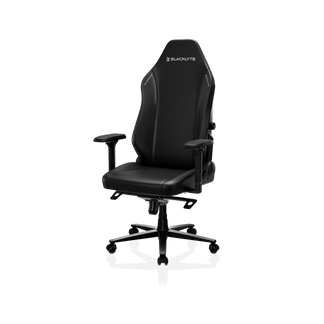
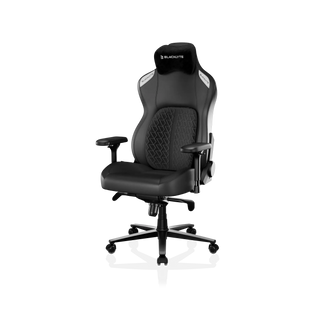
Blacklyte's gaming chair collection is structured around three models that represent different priorities within a shared ergonomic foundation. The Kraken Pro represents Blacklyte's premium tier — a chair engineered for high-performance users who want advanced ergonomics with a bold esports-inspired aesthetic. Its built-in floating lumbar system allows front/back fine-adjustment with a lock position, an aluminum alloy base, 4D armrests, and a contour foam seat. It's a chair that carries esports credibility earned through Blacklyte's partnerships with organizations including Team Liquid, Fnatic, and others across 20+ global esports collaborations — including events run by tournament organizer BLAST. The Kraken Pro is the chair that takes the gaming chair aesthetic seriously while delivering genuine ergonomic performance underneath it.
The Athena Pro is Blacklyte's flagship chair, built for users who want the most advanced ergonomic feature set available. It features a built-in 4-way adjustable lumbar system with both height and depth adjustment, a memory foam seat layer infused with bamboo charcoal and silver ions over a contour-foam core, an aluminum alloy base, and 4D armrests across all axes. The backrest uses contour foam optimized for long-session support, and the Class 4 hydraulic gas piston provides smooth, reliable height adjustment. Recline runs from 90° to 149°, covering everything from focused work posture to a genuine gaming lean.
The Athena is Blacklyte's entry-level model in the lineup, offering the core ergonomic framework — contour foam seat, 4D armrests, frog-type tilt mechanism with adjustable tension, and an aluminum alloy base — alongside an external lumbar pillow for users who prefer a more modular approach to back support. It's built on the same engineering principles as its stablemates, scaled to a different price point without abandoning the fundamentals.
Across the lineup, Blacklyte uses its proprietary upholstery materials — FlexKnit™ Fabric and DuraGen™ Leatherette on the Athena and Athena Pro, and DuraGen™ Leatherette on the Kraken Pro — chosen for their balance of durability, tactile quality, and longevity. These aren't generic OEM materials; they're developed to maintain their feel and structural integrity through years of daily use. You can compare all three chairs side by side to find the right fit for your body type, usage pattern, and setup goals. For a deeper look at how ergonomic science informs Blacklyte's gaming setup philosophy, the Gaming Hub and Ergonomics resource are worth exploring.
Choosing the Right Chair for Your Setup
Making the right call comes down to being honest about how you actually use your chair — not how you imagine you might use it. A few questions worth working through before you decide:
- How many hours per day are you sitting? Under four hours, the ergonomic delta between a good gaming chair and a good ergonomic chair is manageable. Over six hours, it becomes significant — and over eight, it's the most important variable in your setup.
- What's your primary posture while gaming? Keyboard-and-mouse players tend to sit more upright and benefit most from a chair optimized for that position. Controller players often recline more and may get more from a chair with a deeper, more accommodating recline profile.
- Do you have any existing physical concerns? If lower back pain, shoulder tension, or hip discomfort are already part of your daily experience, investing in the most adjustable ergonomic system you can afford is money well spent — it directly affects your health, not just your comfort.
- Does your chair need to look good on camera or match a setup aesthetic? Be honest about this. If the visual component matters for your stream or content, factor it into your decision rather than pretending it doesn't exist.
- What's your long-term budget view? A well-made ergonomic gaming chair with a solid warranty costs more upfront than a budget gaming chair, but replacing a deteriorated chair every 18 months is more expensive over three years than buying quality once.
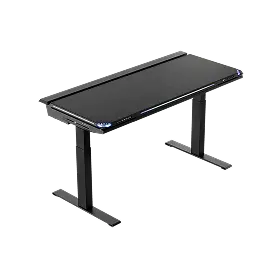
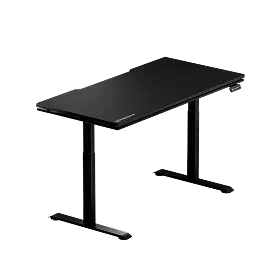
The right answer looks different for every person — but the non-negotiables are the same regardless of which direction you go: proper lumbar support, adjustable armrests, quality seat foam, and a warranty that signals the manufacturer stands behind their build. If you want to explore the full Blacklyte lineup — including chairs, height-adjustable desks, and accessories — the full product collection is a good starting point. Current promotions are also worth checking before you commit.
The gaming chair vs. ergonomic office chair debate doesn't have a single winner — it has a right answer for each individual, determined by their posture habits, session length, physical needs, and setup goals. But the general principle holds: for long-session gaming, the ergonomic engineering of a well-built ergonomic chair almost always delivers better postural support than a traditional racing-style gaming chair at the same price point. The good news is that this tradeoff is increasingly obsolete. Chairs built with serious ergonomic credentials and genuine gaming DNA — like those across the Blacklyte lineup — prove that you no longer have to choose between looking like a gamer and sitting like one who takes their body seriously.
Your chair is the most used piece of equipment in your setup. It deserves the same research and investment you'd give your peripherals, your monitor, or your PC build. Get that decision right, and everything else at your desk performs better because you do.
Ready to find your ideal ergonomic gaming chair?
Whether you're building a dedicated gaming station, a hybrid work-game setup, or looking to upgrade from a chair that's letting your posture down, Blacklyte's team is here to help you make the right call. Explore the full lineup or get in touch directly — no scripts, just straight answers.


