










You've probably sat in a gaming chair that felt incredible for the first twenty minutes. Deep padding, a broad backrest, the whole bucket-seat experience. Then, somewhere around hour three, the stiffness crept in. Your lower back started to ache. Your shoulders drifted forward. The chair that felt like a throne at 9 PM felt like a problem by midnight.
This is what happens when softness gets mistaken for support. It's one of the most common buying errors in the gaming chair category, and it costs people real comfort during the sessions that matter most. A chair can be thick with padding and still be fundamentally bad at keeping your body healthy and focused over long stretches. Conversely, a chair engineered with the right foam firmness, a precise lumbar system, multi-axis armrests, and a well-calibrated tilt mechanism can feel firmer on first contact — and dramatically more comfortable four hours in.
This article breaks down exactly why soft padding and genuine long-session comfort are not the same thing, what the science says about seat materials and pressure distribution, and what features actually separate a chair that holds up through marathon gaming sessions from one that just looks the part.
The Softness Trap: Why Plush Padding Fools You
There's a reason ultra-soft chairs sell well: they make an outstanding first impression. The moment you sit down, the padding yields, the backrest wraps around you, and the whole thing feels indulgent. The problem is that this experience is almost entirely about the first few minutes. What happens next depends on engineering, not on how much foam has been stuffed into the upholstery.
Soft, low-density foam compresses quickly under body weight. Once it bottoms out, your sit bones and tailbone begin to bear concentrated pressure rather than having that load distributed across a wider surface. Research into seating comfort consistently shows that very soft foam creates focal pressure points after extended sitting, causing the surrounding muscles to work harder to stabilise your posture. The result is exactly the fatigue and discomfort you were trying to avoid. Extra cushioning, without the structural integrity underneath it, is essentially comfort theatre.
This misconception runs deeper than marketing. Many buyers conflate the tactile softness they feel in a showroom or on first sit with the sustained, systemic comfort that only proper ergonomic engineering can provide. Those are fundamentally different things, and understanding the gap is the first step toward buying a chair that actually performs.
What Long-Session Comfort Actually Means
Genuine long-session comfort is a system-level outcome. It's the product of several overlapping features working together: the seat base supporting your weight evenly, the lumbar system keeping your spine in its natural curve, the armrests offloading tension from your shoulders, and the recline mechanism allowing your body to shift position without losing support. Remove any one of those components, or underengineer it, and fatigue starts accumulating — usually in the lower back first, then the neck and shoulders.
The clearest signal that a chair is comfortable for long sessions isn't how it feels at minute one. It's how your body feels at hour four. A chair that reduces postural load, distributes pressure evenly, and allows micro-movements throughout a session will leave you feeling significantly less fatigued than one with twice the padding and none of the adjustability. Comfort is sustainability, not softness.
Why Foam Engineering Matters More Than Foam Thickness
Not all foam is created equal, and thickness is not the relevant variable. What matters is the foam's firmness, rebound characteristics, and how well it distributes pressure across the seat pan. Leading spine health researchers have highlighted that too-soft seating material lacks the structural integrity to allow proper stress migration — the process by which pressure shifts naturally from tissue to tissue to avoid localised fatigue. When foam is too soft, weight pools at the heaviest contact point rather than spreading across the seat, accelerating discomfort.
Memory foam, when properly engineered, offers a strong solution to this problem. Its viscoelastic properties allow it to slowly conform to body shape and distribute weight across a broader surface, reducing pressure on the hips, pelvis, and thighs. The key word is engineered: the firmness profile, rebound speed, and layering of the foam all determine whether it provides genuine long-session support or just initial softness. A well-designed memory foam seat should feel responsive rather than sinking — it should cradle without swallowing.
The architecture of the foam layer also matters. A single soft layer will compress fully under extended use. A dual-layer construction that pairs a softer surface layer with a firmer, more durable core creates a seat that both relieves surface pressure and maintains its structural height over time — preventing the bottoming-out sensation that turns a comfortable gaming session into a painful one.
Lumbar Support: The Real Pillar of Extended Sitting
If there is a single feature that separates a chair that genuinely supports long sessions from one that doesn't, it's the lumbar system. Your lower back has a natural inward curve (the lumbar lordosis) that flattens when unsupported, causing the muscles surrounding the spine to compensate. Over hours of sitting, that compensation leads directly to fatigue, stiffness, and the familiar ache that sends you standing up and stretching between rounds.
A fixed lumbar cushion — the kind that clips on or is moulded into a foam pillow — can only be positioned correctly for one type of body at one recline angle. Change your position or your body type, and the support misses the target, often pressing into the wrong vertebral level entirely. Adjustable lumbar support is not a luxury feature; it's the mechanism that allows a chair to actually serve your spine rather than approximate someone else's.
The quality of the adjustment matters just as much as the fact of it. Moving support vertically (height) lets you match the position of your lumbar curve, which sits at a different point for a 5'6" user than for someone 6'2". Moving it horizontally (depth) lets you dial in the pressure it applies to the curve. A lumbar system that both meets your curve and lets you tune its pressure is meaningfully more effective than a fixed cushion — especially when your posture and position change naturally across a long session.
4D Armrests and the Upper-Body Equation
Lumbar support gets most of the attention, but the armrests are doing significant ergonomic work in the background. Your arms are not weightless. Without proper support, the muscles of the neck, upper back, and shoulders carry that load continuously — a form of static muscular effort that generates fatigue quietly and cumulatively. By hour three of a gaming session, that sustained tension is often what manifests as neck stiffness and the ache across the tops of the shoulders.
Fixed armrests, or armrests that only adjust in height, create a structural mismatch for most users. They force your arms into a position defined by the chair rather than your body and desk setup. 4D armrests adjust across four dimensions: height (aligning with desk level), width (matching shoulder spacing), depth (supporting the forearm at the right distance), and pivot angle (keeping wrists neutral during keyboard and mouse use). Each dimension independently reduces a specific category of strain: shoulder shrugging, elbow flaring, forward reach tension, and wrist torque.
For gaming specifically, the pivot axis is particularly valuable. Controller use, mouse-heavy FPS play, and keyboard-intensive strategy sessions each demand slightly different forearm angles. Being able to rotate the armrest surface to meet your arms rather than forcing your arms to meet a fixed pad is one of those adjustments that seems minor until you've experienced a session without it.
Tilt, Recline, and the Freedom to Move
The human body is not built to hold a single static posture for hours. Natural movement, even subtle shifts in recline angle, helps redistribute pressure across the seat and backrest, preventing any single tissue from accumulating the kind of microload that causes discomfort. A chair that locks you rigidly upright is not doing you a comfort favour, even if it looks ergonomically correct. The ability to rock and recline within a controlled range is a genuine physiological benefit during long sessions.
A well-calibrated tilt mechanism allows the chair's backrest to recline while maintaining contact and support throughout the range of motion. Adjustable tilt tension means you can tune the resistance to your body weight and sitting style — light enough to allow natural micro-movement during relaxed sessions, firm enough to provide stable resistance when you need to lean forward in focus. A recline range that runs from an upright working position through to a reclined resting angle (covering a practical span like 90° to 149°) gives you genuine postural flexibility without ever sacrificing support.
Build Quality That Holds Up to Real Sessions
Comfort engineering has to be built on a foundation that maintains its geometry over time. A chair with well-designed lumbar support and precise armrests still underdelivers if the base flexes, the hydraulic gas piston loses calibration, or the internal frame shifts under load. Build quality is the long-term enabler of ergonomic performance — it's what keeps the chair's adjustments where you set them and keeps the seat height stable through hours of use.
The base material matters here. An aluminum-alloy five-star base offers a meaningful stiffness and weight advantage over plastic equivalents, providing a stable platform that doesn't contribute micro-flex and wobble to the seating experience. A Class 4 hydraulic gas piston maintains smooth, reliable height adjustment and holds position under sustained load without creep. These are the unglamorous engineering details that distinguish a chair that performs for years from one that gradually stops behaving like the chair you bought.
Upholstery choice also feeds into long-session comfort in a more practical way than most buyers consider. A breathable fabric surface significantly reduces heat and moisture buildup compared to synthetic leather, which directly affects how comfortable you remain during extended play. For users who run hot or game in warmer environments, upholstery material is a comfort variable that's easy to overlook at purchase and hard to ignore by hour four.
How Blacklyte Chairs Are Engineered for Long-Session Comfort
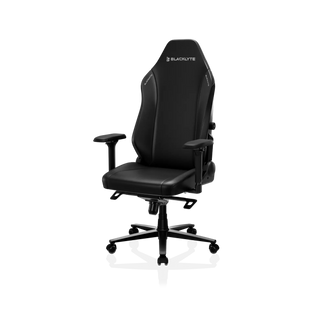
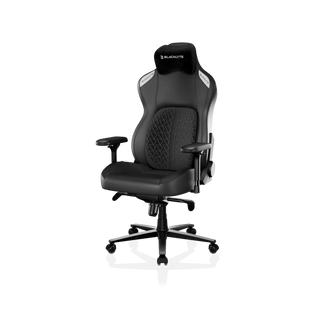
Every feature discussed in this article is reflected in the engineering behind the Blacklyte gaming chair lineup. Both the Kraken Pro and the Athena Pro are built with the long session in mind — not as a marketing premise, but as a functional design standard.
Kraken Pro: High-Density Memory Foam and Dynamic Lumbar
The Kraken Pro is built on high-density memory foam that delivers firm, responsive support throughout a session. Rather than softness as a first impression, the foam is tuned for durability and even pressure distribution — maintaining its structure under sustained use where softer alternatives compress and lose their supportive geometry. The chair's Dynamic Air Lumbar Support System is a floating lumbar with front/back fine-adjustment and lock, letting you dial in the depth of support against your lower back curve precisely. The base is aluminum alloy, the gas piston is Class 4, and 4D armrests come standard — covering all four axes of upper-body ergonomic positioning across the lineup.
Upholstered in DuraGen™ Leatherette, the Kraken Pro is available in black and reclines across a 90°–149° range, with a frog-type tilt mechanism and adjustable tilt tension that supports natural movement throughout a session. At $649, it's Blacklyte's higher-priced model, reflecting the specification depth packed into its build.

Athena Pro: Dual-Layer Memory Foam and 4-Way Lumbar
The Athena Pro takes a dual-layer approach to its seat construction: upgraded dual-layer memory foam that pairs an ultra-soft memory foam surface over a high-density polyurethane core infused with carbon and silver ions. The surface layer relieves pressure at the contact points while the core maintains the structural height and firmness needed to prevent bottoming-out during extended sessions. It's the architecture described earlier — softness where you need relief, firmness where you need support.
Its lumbar system offers 4-Way Built-in Adjustment, moving both up and down in height and in and out in depth — allowing precise placement of support against your individual spinal curve regardless of your height or sitting position. Like the Kraken Pro, it ships with 4D armrests across the lineup, a 90°–149° recline range, and an aluminum-alloy base. The Athena Pro is available in both FlexKnit™ Fabric (for those prioritising breathability across long sessions) and DuraGen™ Leatherette, and it's the only Blacklyte chair available in white (a DuraGen™ Leatherette colorway). At $499, it's Blacklyte's flagship model.
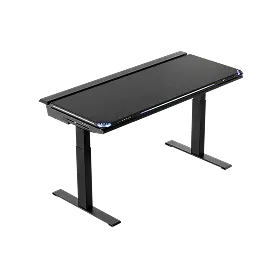
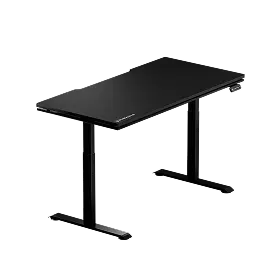
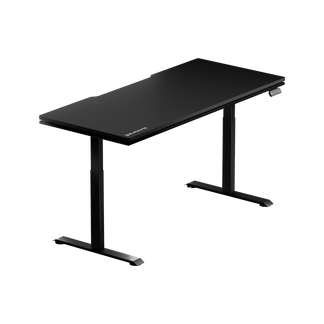
For a direct side-by-side of both chairs' full specifications, the Blacklyte Chair Comparison page covers every dimension so you can match the right model to your body and session requirements. If you're also building out your workstation, Blacklyte's standing desks pair naturally with both chairs — pairing an ergonomic seating solution with a height-adjustable desk creates the most complete long-session setup.
Blacklyte chairs ship free, carry a 3-year warranty extendable up to 5 years, and come with a 30-day return window — so you have genuine time to evaluate how they perform in your actual setup, not just in a first-impression sit test. To learn more about how ergonomics applies to both gaming and work, visit the Blacklyte Gaming Hub and Ergonomics pages.
The Bottom Line
Soft padding is a first impression. Long-session comfort is a result of engineering. The distinction matters because most people spend real money on a chair based on how it feels during the first sixty seconds in a store or after unboxing — and then sit in it for thousands of hours afterward. A chair that feels plush on first contact but lacks the foam architecture, lumbar precision, armrest range, and tilt calibration to sustain that comfort over hours will always disappoint in the sessions that matter most.
The features that actually determine how you feel after four or six or eight hours are the ones often discussed last in product listings: foam firmness and layering, lumbar adjustability, 4D armrest positioning, build quality at the base and mechanism, and upholstery breathability. Get those right, and comfort follows — not as a sensation, but as an outcome.
Ready to Find Your Long-Session Chair?
Explore the full Blacklyte lineup, compare chair specifications side by side, or get in touch with our team for a personalised recommendation.
Shop Gaming ChairsCompare ChairsContact Us


